I took a marshrutka out from Stepanakert to the old scenic town of Shushi.
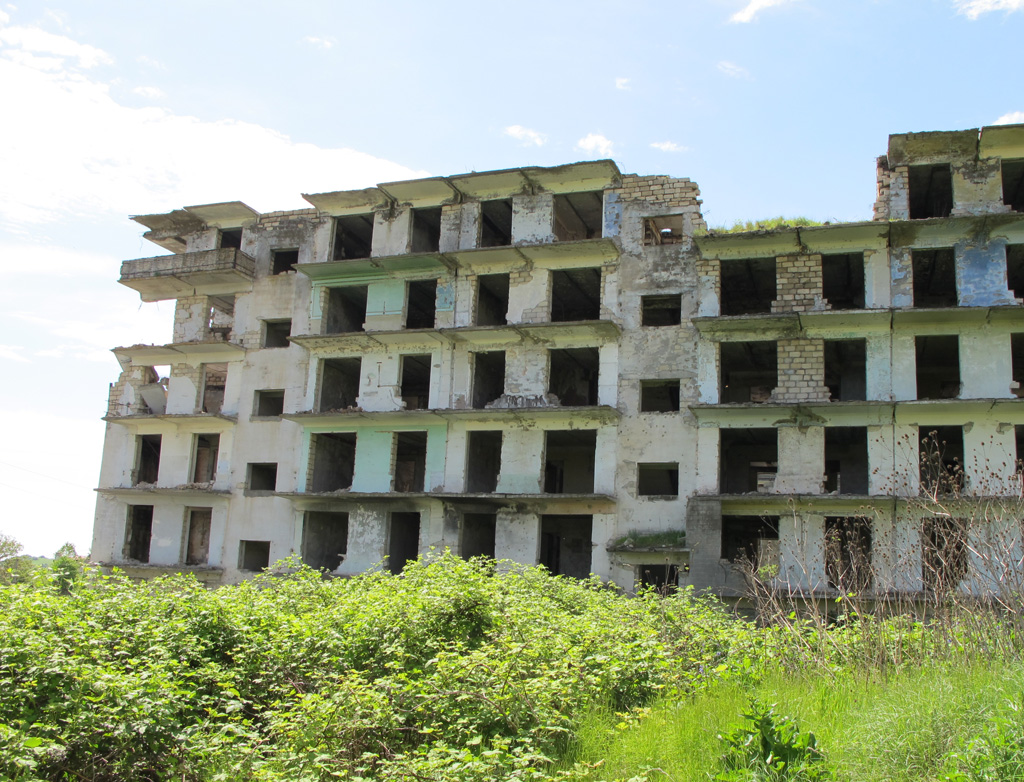
Shushi was on the front-line of the 1990’s Nagorno-Karabakh war and suffered heavy damage. It was an Azerbaijan stronghold, opposing Armenian-held Stepanakert. Over the course of the war most of the population fled, and the town still has many abandoned buildings.
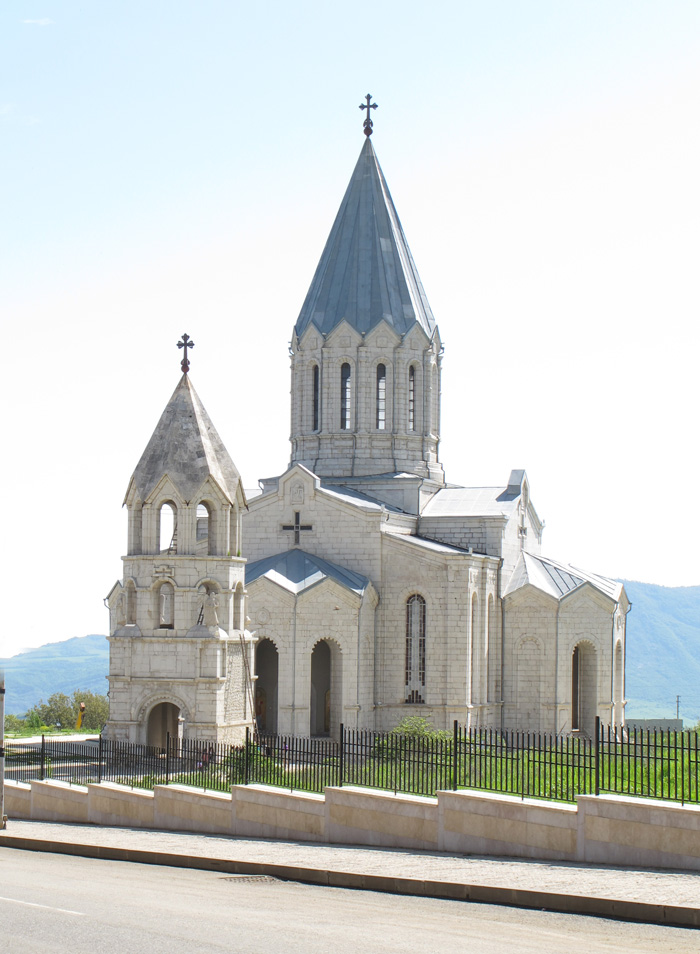
Ghazanchetsots
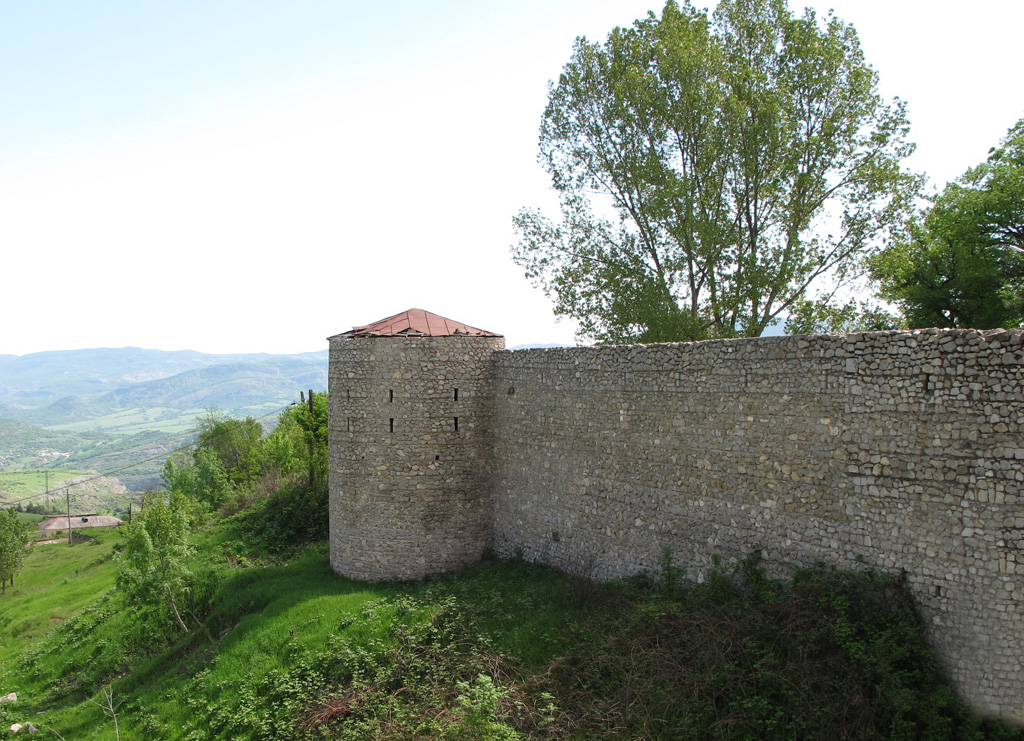
I started at the Ghazanchetsots Armenian Orthodox cathedral, which is partly restored but mostly new built and looks very spiffy. The interior has some well-executed modern murals in a classic icon style. Then I strolled out to the old city walls. These also appear to have been fairly aggressively restored after the war: most of the stonework looks fairly new.
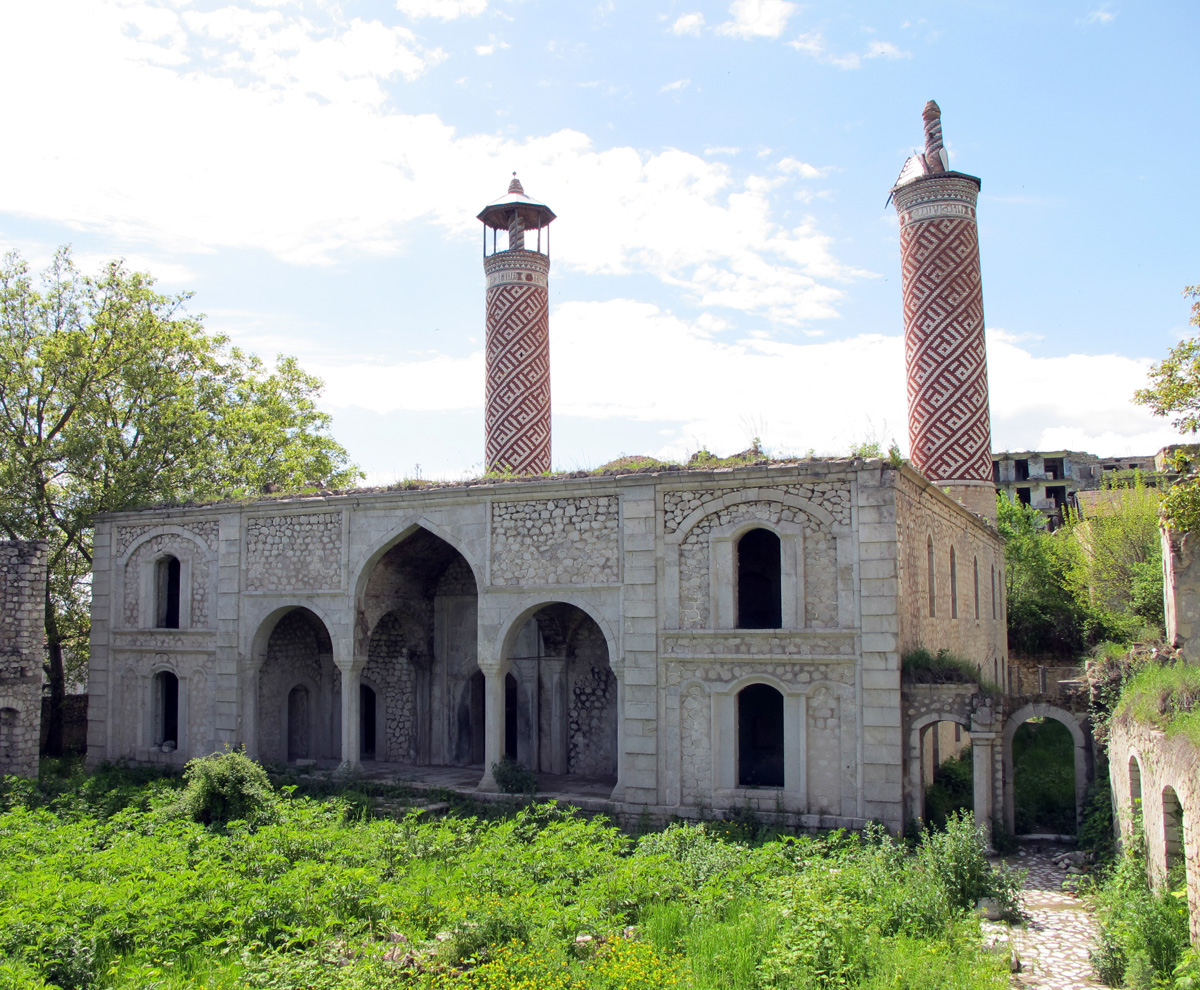
After some searching, I found my way to the remains of the old mosque. In an elegant theological touch, it’s two minaret towers have the Arabic letters for “Allah” repeated in white-on-red stripes ascending up towards heaven. The mosque interior is gutted and the courtyard is overgrown with weeds.
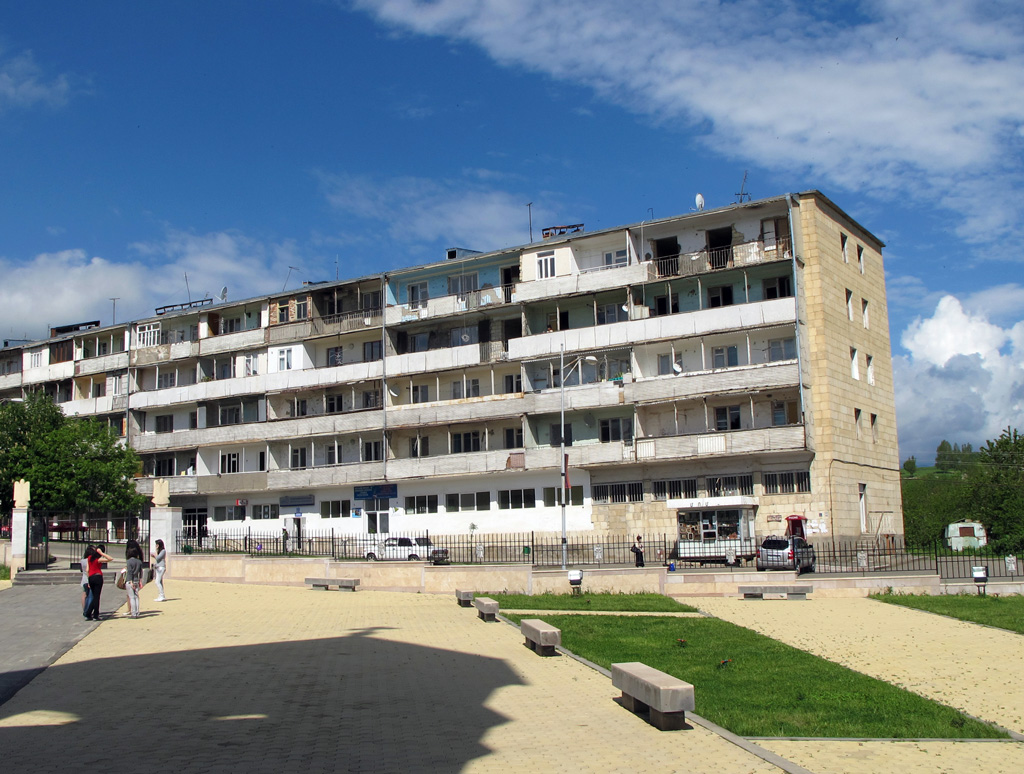
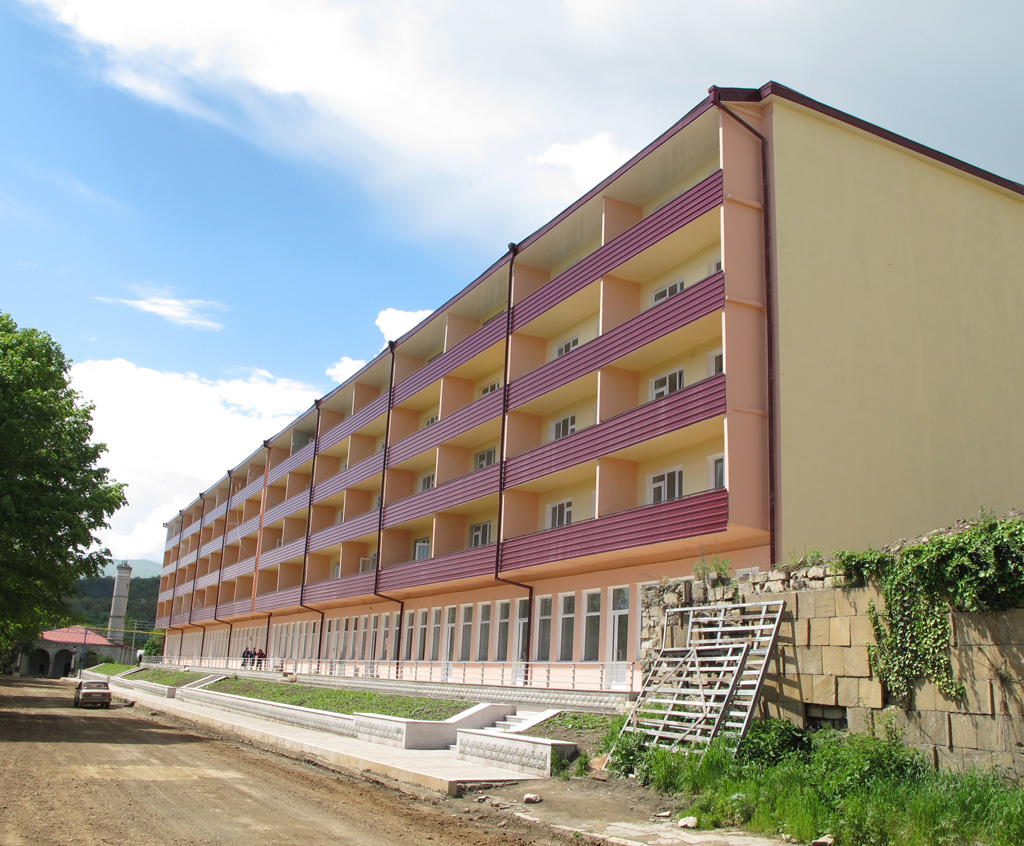
The center of town contains many decrepit old Soviet-style apartment blocks. But there is also some amount of new construction and renovation going on. Further out there are many derelict and abandoned buildings, some mere shells.
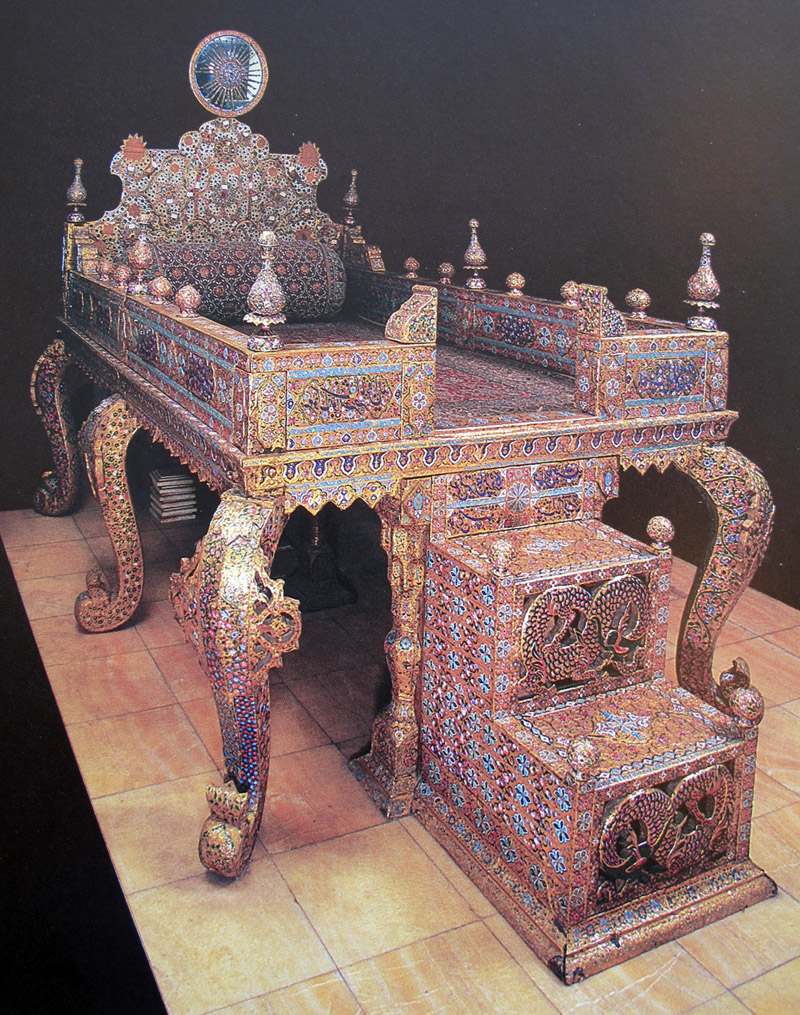
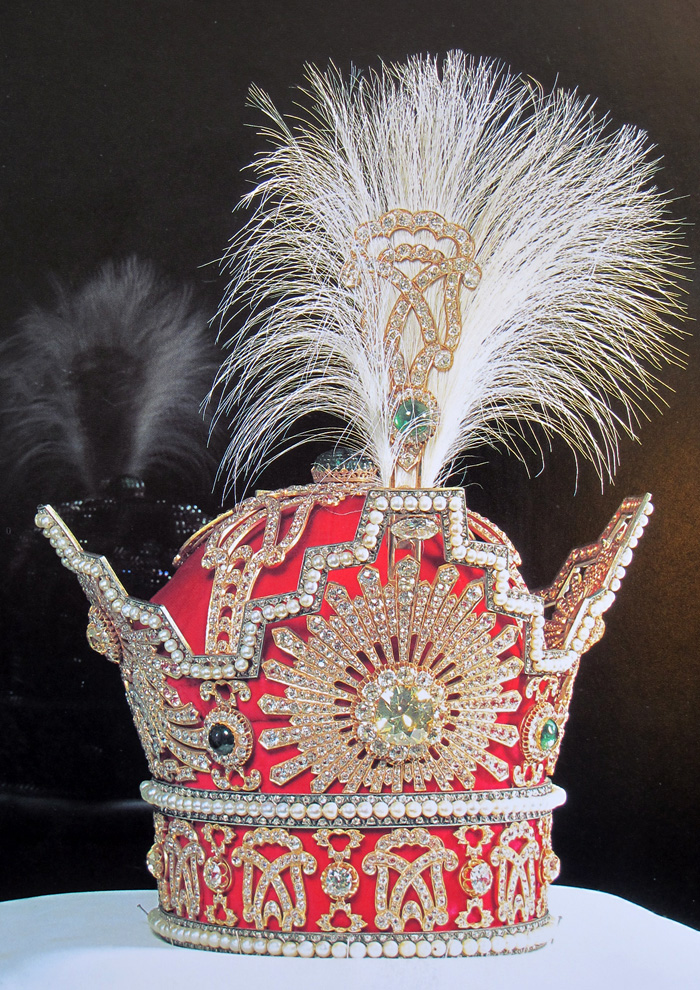
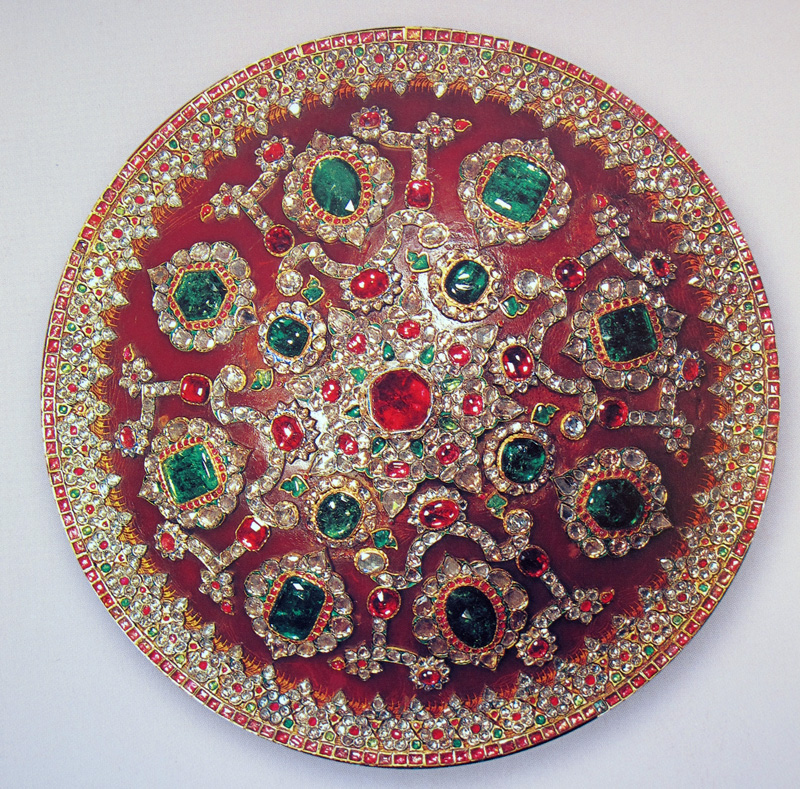
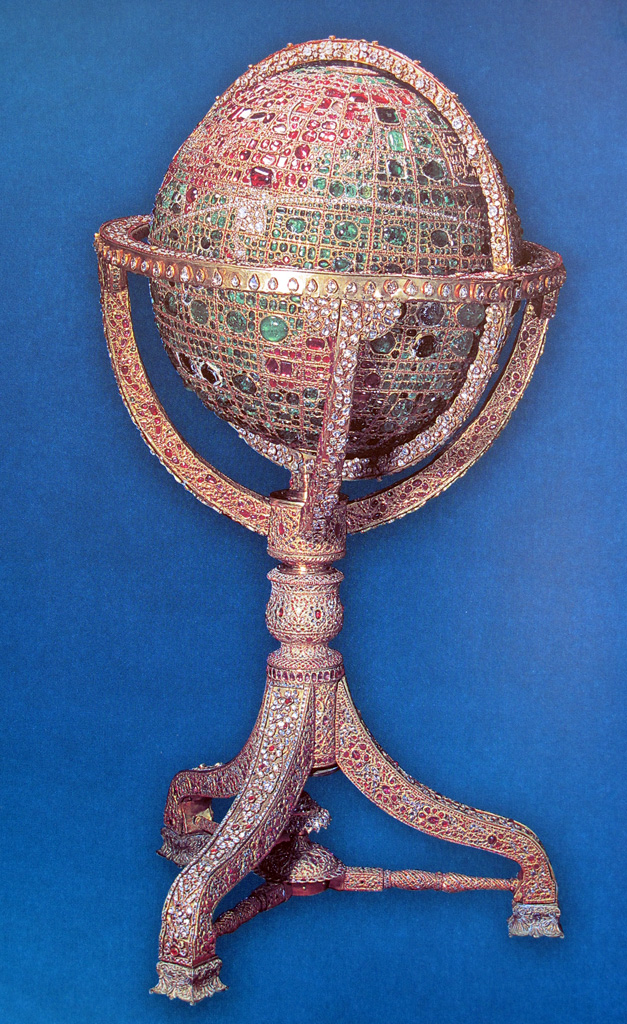
The Peacock ThroneReza Khan CrownJewelled BucklerJewelled Globe
The Tehran National Jewels Museum is truly over-the-top, with a staggering collection of gem encrusted artifacts.
I had missed this when I was in Tehran in 2008, so I made sure to catch it this time.
The collection is in 37 large display cases, full of many lavishly decorated items. There are bright crowns, covered in pearls, a red and green encrusted globe, endless small artifacts covered with small red, green, and white stones.
OK, my first reaction on seeing all of this was to assume it couldn’t all be real. There is just too much stuff. And too many bright colors. It looks like costume jewelry. It can’t possibly all be real. Can it?
Then I stopped, and thought, and read the guide book. This is the accumulated collection of the Shahs of Persia. For several centuries they were the wealthiest potentates of the region, avidly buying up the best gems for their treasury. And that collection was never broken up. The 19th c. shahs added to it, including many large South African diamonds. The 20th c. Pahlavi shahs added further jewels and the collection survived the 1979 revolution intact. So, yes, the Museum is hosting the centuries old accumulated collection of very wealthy rulers. So, gulp, it is probably mostly real. (Even the best museums have the occasional imposter.)
Some of the more striking pieces include
the Reza Khan crown (with 3380 diamonds and 368 matched pearls)
the Darya-i-Nur “Sea of Light” 182 carat pink diamond
a large globe with the land marked with rubies and the seas with emeralds
a sword scabard entirely covered in 1869 rose-cut diamonds
a circular shield decorated with giant rubies and emeralds
just outside the vault proper is a display room holding the jewel encrusted Peacock Throne
Oh my.
Some items do look rather gaudy: I guess when you use large emeralds and rubies, it is hard to look restrained.
The Museum is not sign posted. It is in a bank vault underneath the Melli Bank on Ferdossi Street, but to reach the Museum you need to enter via the the Central Bank building just to the North. They store your bag (and camera), run you through a metal detector and then send you South across a courtyard to the vault.
The Museum hours are 2:00-4:30 pm on Saturday to Tuesday. It is definitely worth trying to visit if you are in Tehran.
The Astara border crossing from Azerbaijan to Iran turned out to be a bit of a zoo.
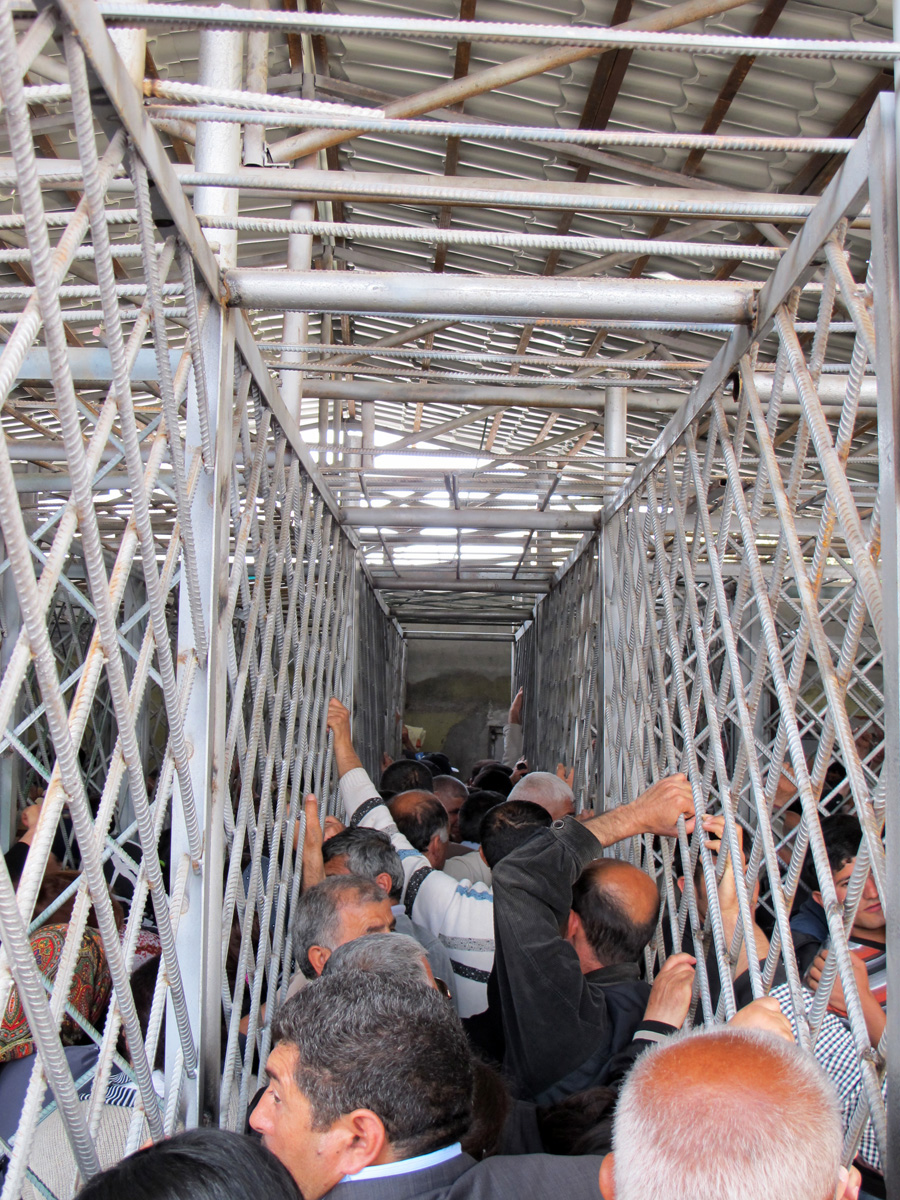
The border crossing is very slow, and to maintain order the Azeri authorities have created a special queuing area with four distinct queues separated by cage-like walls. Every 30-40 minutes the authorities would open the steel door for one of the queues and let 20-30 people into the main immigration area. Each queue might only move every couple of hours.
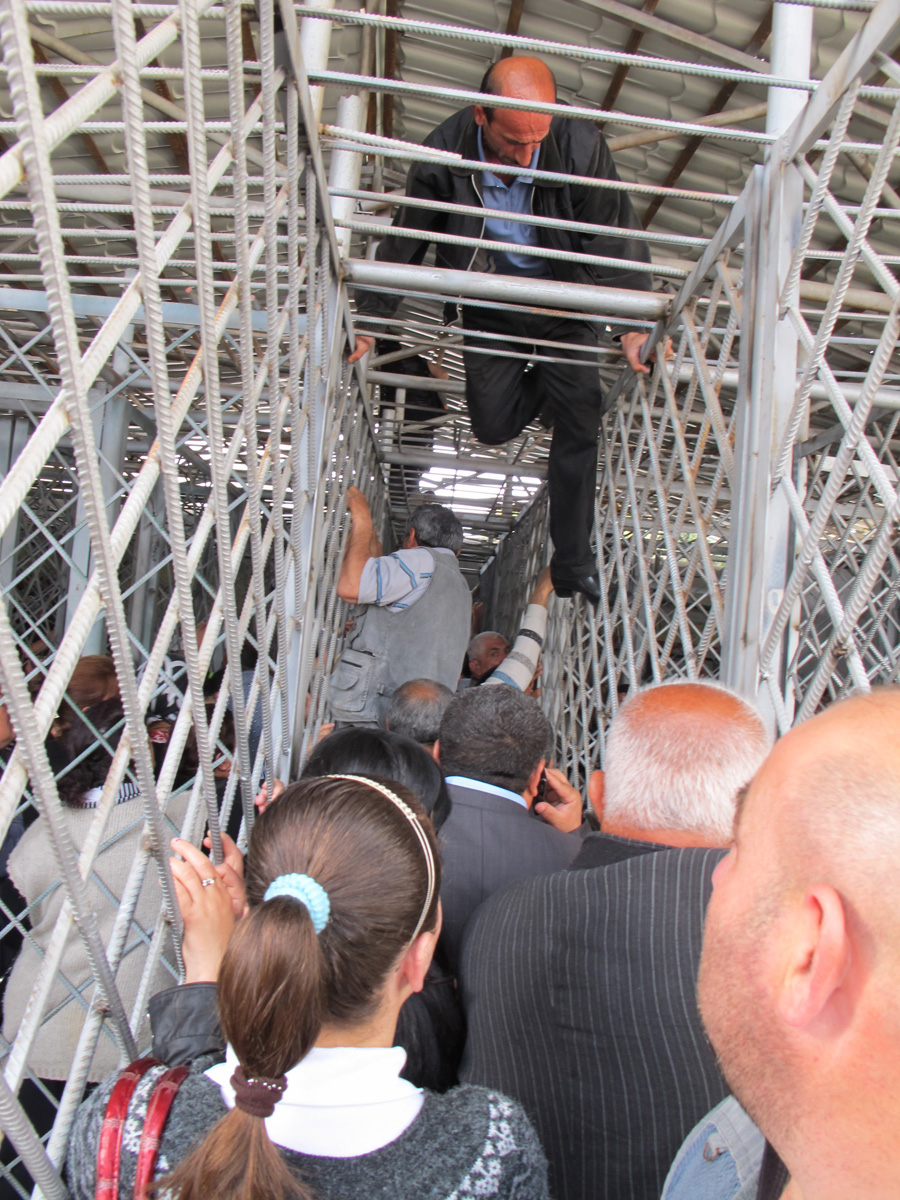
Ahh, but the Azeris do not like to queue. Especially not for 4+ hours. So when a door opened some people in adjacent queues would frantically climb up through the roof and try to force their way down into the moving queue. And as the authorities tried to reclose the steel door, people would frantically try to force their way through anyway, sometimes using planks of wood to try to reopen the door!
Queue Jumping
I arrived at 8:15am. There were already several hundred people queued. By 11:45 I was still stuck in line and I climbed up and traversed out for a bathroom break. But of course, at that very moment our steel door opened, my queue started to move, and I had to frantically start climbing back in. Luckily people saw that I was just reclaiming my earlier place and made it easy for me, which was nice of them.
But woops, I was spotted by the authorities. You! I was waved angrily to the head of the line. I don’t speak Azeri, but the gist seemed to be a rather annoyed “You’re a foreigner!” I was ushered through into the immigration area and then ushered to the front of the inner queue. I felt simultaneously guilty for queue jumping and also slightly silly for not having played the “foreign tourist” card earlier.
I was quickly processed through Azeri immigration, with only a short discussion of British football teams. But the Iranian side was more interesting.
I was stamped into Iran fairly quickly. But then after a short pause, I was escorted upstairs to the immigration police headquarters. Where everyone was very nice, but my papers were very carefully checked. The chief himself reviewed all of my many passport stamps, no doubt looking for the dreaded I*****i stamp. He exclaimed in mild amusement when he finally deciphered “Paraguay” and the mood got a little lighter. Eventually he was done, everyone seemed happy, and I was handed off to a soldier with a rifle, apparently to show me out. Ah, but not quite.
The soldier escorted me out of immigration. And then into town. And then towards the local police station. And then into an interview room. Woops. But everyone seemed pretty relaxed and the police merely rechecked my passport and asked the usual “where are you from” kind of questions. And then I was carefully fingerprinted. This was probably the main reason for my visit to the police station: UK immigration fingerprints Iranians, so Iran is determined to return the favour.
After fingerprinting, I was led out to wash my hands and then waved onwards. Amidst the enthusiasm to check my passport and fingerprints, I had somehow bypassed customs, so we were all done. Hurrah!
After all that, I splurged on a taxi to Ardabil, and then took a bus on to Tabriz.
Practicalities: I think my timing (8:15am on a Saturday) was especially bad. I arrived after the locals had already mostly joined the queue, and very few people were joining behind me. By the time I finally got through, there was only a fairly short queue behind me. If I had arrived at (say) 2:00pm I might have had only a fairly short wait. Also, I should probably have played the “foreign tourist” card earlier. There seems to be an area to the left (East) of the caged queue where some officials were housed and maybe I could have talked my way through there.
I caught a local bus out to the visitor center at the giant Itaipu (“it-eye-poo“) dam on the Brazil-Paraguay border. Depending how you measure it, this is either the #1 or #2 hydroelectric plant in the world, with a peak generating capacity of 14 Gigawatts. Yowza!
I signed up for the “Special Circuit” tour, which actually goes inside the dam.
We watched an introductory video, which included lots of eco-friendly chit-chat about how the dam companies are funding various worthy local initiatives. This all seemed fine, but rather distracting small potatoes stuff compared to the great dam itself!
There was tight security on the tour. We weren’t allowed even small bags, and we were each hand scanned before boarding the bus. In theory shorts and exposed toes are forbidden for safety reasons, but our guides tactfully overlooked several short and sandal clad visitors.
We were lucky, some of the spillways were open. (This only happens around 10% of the time.) There was a pretty serious volume of water going through, and at high speed. Our guide told us that the current flow rate was 7.8 million litres/sec (7,800 m3/sec) . Yikes. The spillways are designed so that at the bottom there is a very hard wall which cause the water to shoot up and away from the end of the spillway, to reduce erosion under the exit. Each of the gates is 20m wide and several were open.
One difficulty in photographing the dam is conveying a sense of scale. It’s all ****ing enormous. The overall dam length is 7km. When we were there, the spillways were firing out several times the average volume of Iguazu Falls.
We drove along the top of the dam and stopped for photos of both the Parana and spillways downstream, and the giant lake Itaipu upstream. I thanked the mighty Rio Parana for graciously sharing his power.
Inside the dam, we had to wear hard hats. We were shown an internal open shaft running all the way down (100m?) to the original river bedrock. Then we were taken to a viewing gallery over the main control room, with its staff of 5 Brazilians, 5 Paraguayans and (on alternating shifts) either a Paraguayan or a Brazilian chief. The international border runs down the middle of the room. Then we were taken to the giant Generator Hall, which we were told is 1 km long. There isn’t much to see there, just giant red covers on the floor over the generators.
For the finale we were taken down to see the rotating vertical shaft of a generator. 700 Megawatts of rotating steel just a few feet away!
Right now over 90% of the energy is going to Brazil. They generate at different frequencies (50 Hz or 60 Hz) for the two countries. Our guide was careful to explain that everything is handled evenly between the counties. However, Brazil seems to have been the main driver in the construction and is the main power consumer. And they built and run the visitor centre too.
This was a really great tour! If you’re visiting Iguazu, don’t overlook this.
The Brest Fortress complex commemorates the heroic defence of the Soviet garrison against the German invasion of June 1941.
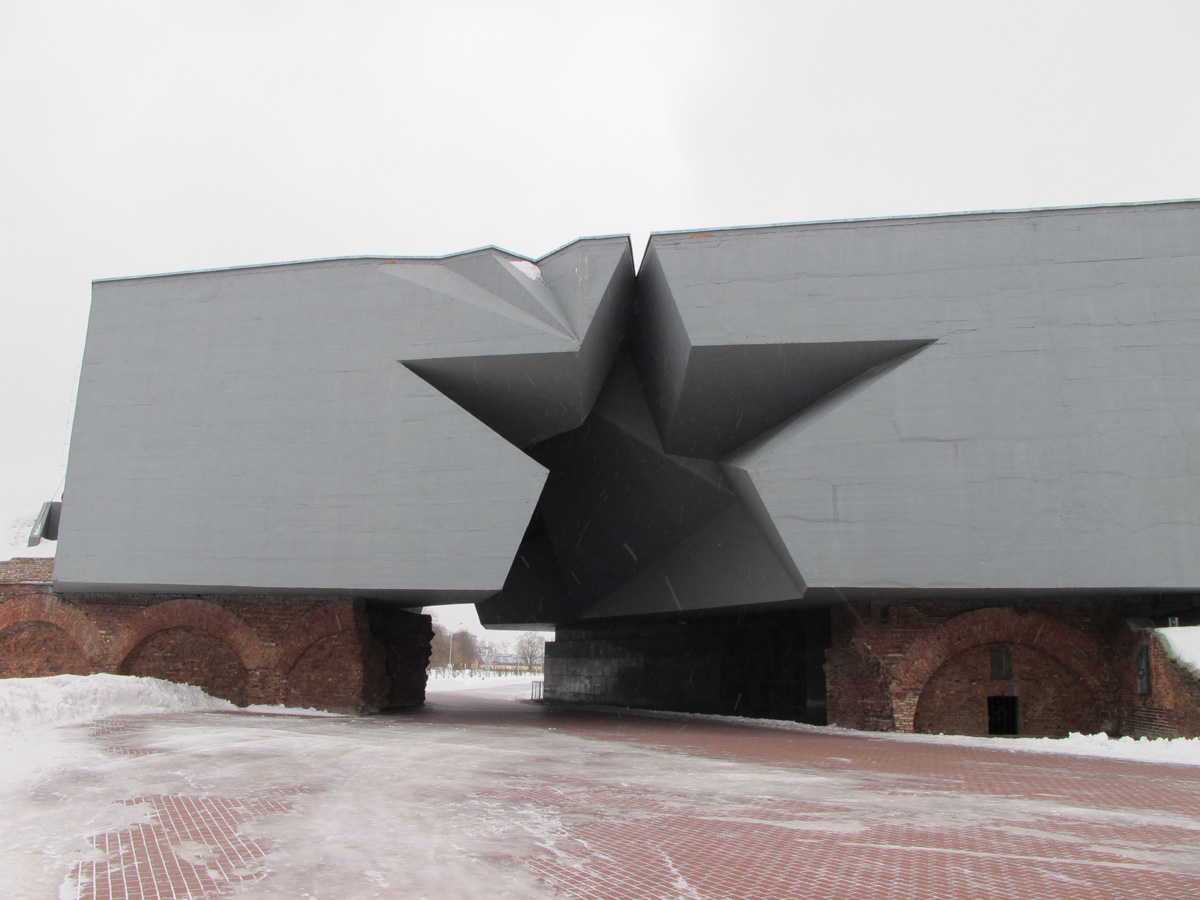
Brest Fortress Entrance
I entered the Hero Fortress at its new ceremonial entrance: a giant concrete slab with a Soviet star cut into it. Stirring martial music plays as you enter. The gateway was rather grayer and drabber than I expected, but still very impressive. It looks better seen from inside the fortress than from outside.
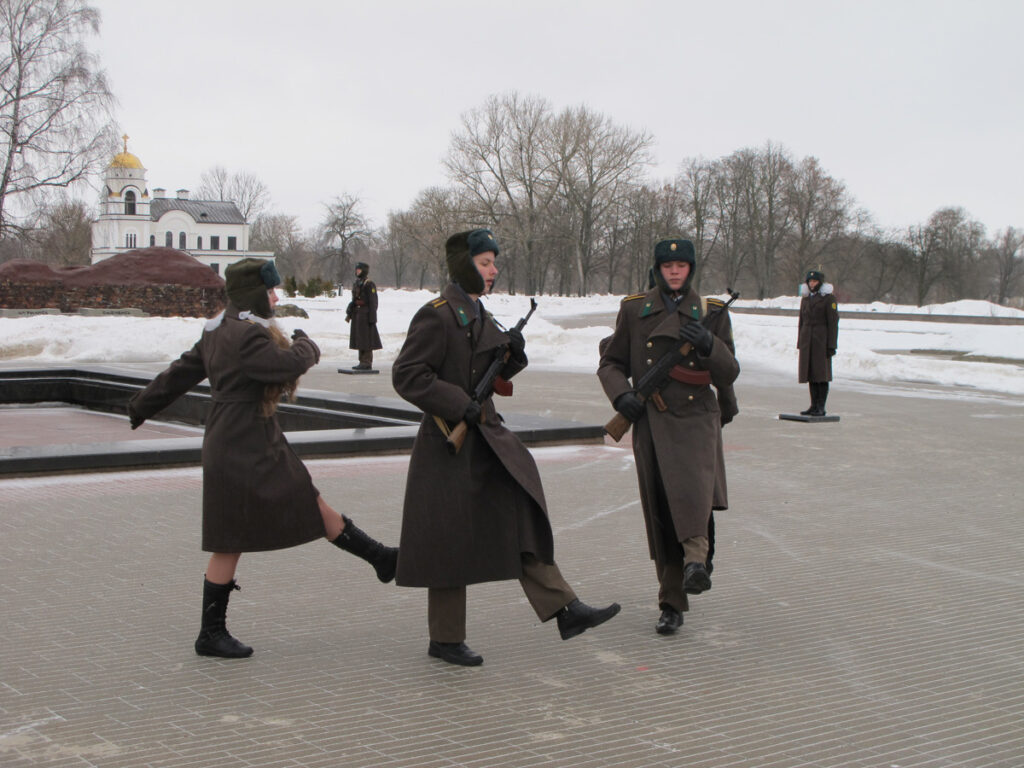
I arrived just in time to see a set of local teenagers do a “changing of the guard” ritual at the eternal flame, complete with high-stepping precision marching. In a small concession to the intense cold, they had their ear flaps folded down.
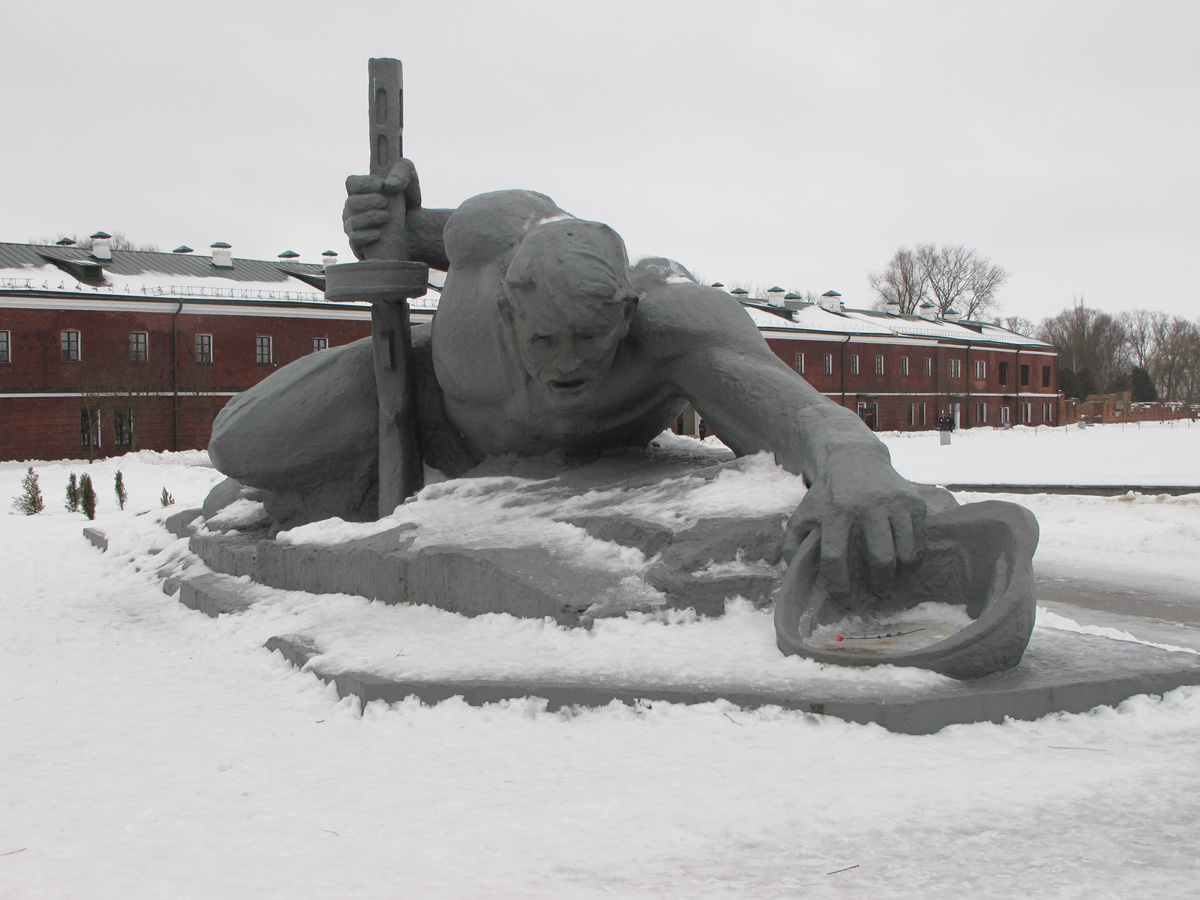
“Thirst”
The fortress complex includes various large Soviet-era memorials. There is a fine concrete sculpture “thirst” of a soldier reaching his helmet out to gather water.
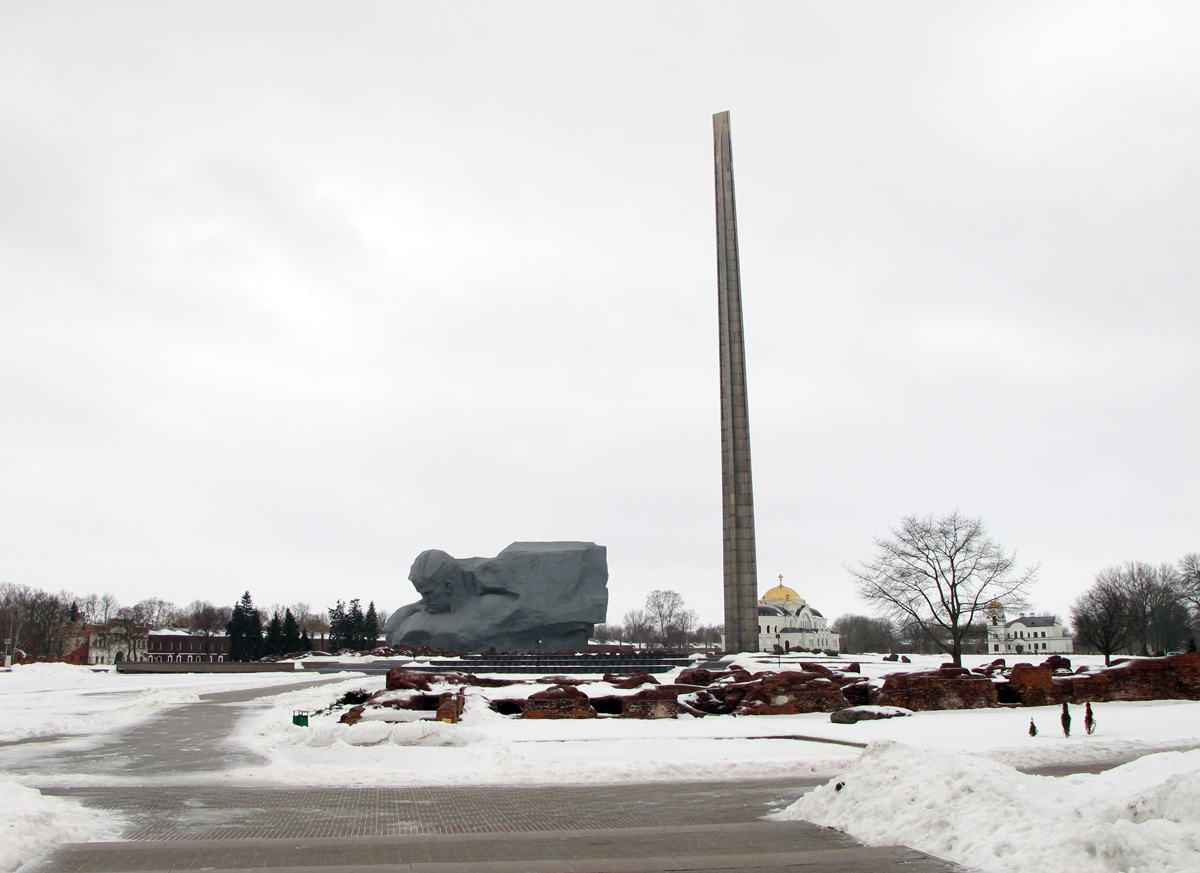
Obelisk
The main monuments are a giant obelisk (100 m) in the form of a Soviet bayonet and an enormous concrete head of a scowling Soviet soldier. Unfortunately while the head is large, it is poorly formed and unsympathetic.
I also ambled through the Fortress Museum, which has some displays of the 19th c. fortress, and even a very short display on the 1939 Polish defence, but which is naturally focused on the 1941 defence, with many photos of the defenders.
Commentary: In 1941 the Soviet Union desperately needed some heroic myths, and the “Defence of the Brest Fortress” fit the bill. A small group of heroic defenders, stemming the flow of the German invasion. It’s a good story and I don’t doubt the defenders were truly heroic. However the German advance seems to have been focused on deep penetration and encirclement, which implies bypassing fortresses and fixed defence points and leaving those to be mopped up later by secondary forces. So the leisurely siege is unlikely to have impacted the main invasion.
The following day: At the Brest station, I met three unhappy travelers, two Americans and a Dane. They had been taking the train from St Petersburg to Warsaw and hadn’t realized that their train took a non-obvious detour through Belarus. There are no immigration checks at the Russian-Belarus border, so they had been able to enter Belarus, but then when they were exiting at Brest they were caught by Belarus immigration. Traveling in Belarus without a visa: not a good situation! They were removed from the train and delayed for two days in Brest. They were finally allowed to exit after signing “a big stack of forms” and paying moderate fines (about $200 for the American couple) for having entered Belarus illegally.
I got into Minsk on December 21st 2010 (Tuesday), coming in from Smolensk. I’d seen news reports in Russia of large scale protests and large scale arrests in Minsk on Sunday, after opposition supporters decided to express their skepticism of Mr Lukashenko’s reported 80% share of the vote in the Belarus presidential elections. I hadn’t got any news of what had happened since Sunday, so I was feeling distinctly timid as I got off the train.
But the city was completely quiet and calm when I got in. One of my first sights was a policeman issuing a motorist a routine traffic ticket, which, oddly enough, felt very reassuring. I visited the Independence Square and the Oktybrskaya square, which are both traditional center for protests, but they were calm, with light pedestrian traffic and only a couple of militia (police) ambling around.
The giant KGB building on Nezalezhnastsi Avenue was tranquil. (Yes, in Belarus they are still the “KGB”. See their website.) Opposite, a large bust of Felix Dzerzhinsky (founder of the Cheka, later the NKVD, then the KGB) gazed serenely on the passers by.
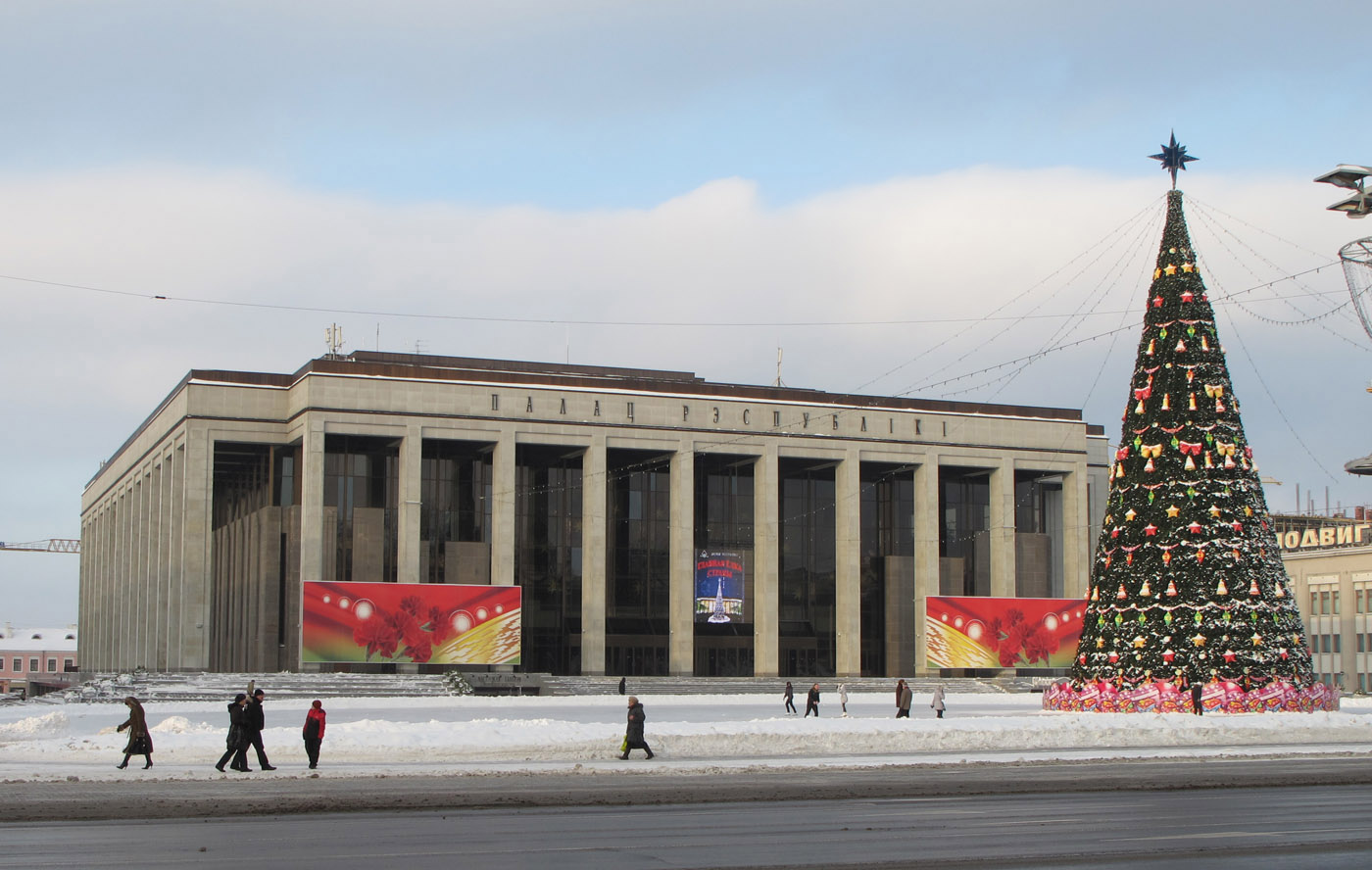
At Oktybrskaya Square a few people were skating around a giant New Year’s tree. Yes, the benign authorities of Minsk had converted the middle of the (protest) square into an ice skating rink for the holidays. How thoughtful.
There were apparently some very small protests last night but in general things seem to be pretty much back to the Minsk version of normal.
Anyway, I look forward to traveling on to the provincial calm of Pinsk tomorrow…
I visited the Baikonur Cosmodrome on Dec 14th-17th 2010 for the Soyuz TMA-20 launch. (Here are highlights and a photo archive.) For anyone considering this trip, here are a few details on tour logistics.
Permissions and Entry Formalities
Baikonur is inside of Kazakhstan but is under Russian administration. It is a secure zone, with controlled access.
You can NOT travel around Baikonur on your own. You need to have special permission from the Baikonur authorities, which means that you need to travel as part of an authorized tour group, with a guide. It can take up to 45 days to get this permission, so book early.
We flew from Moscow to Baikonur. At the Baikonur airport there were both Russian and Kazakh officials meeting our flight. Our Baikonur guide was waiting for us, with a permit listing our names. The Russian official looked quickly at our passports to check that our names were on this approved list and then waved us through. Our passports were not stamped. The tour permit meant we had permission to visit the Baikonur area, but not to enter the rest of Kazakhstan.
I asked our guide what would happen if I had a Kazakh visa? She assured me that in that case I could ask the Kazakh official at the airport to stamp a Kazakh entry stamp into my passport and then I would be able to travel on into other parts of Kazakhstan. Note that I didn’t actually try it, and perhaps my guide was mistaken. But it seems like a plausible solution: there must be occasional travellers who would like to enter at Baikonur and then travel to other parts of Kazakhstan.
You will need a double-entry Russia visa if you plan to fly back to Moscow.
During the tour, our guide was always with us. There were frequent security checkpoints inside the Cosmodrome. I think our guide was supposed to stay with us even in Baikonur City itself, but in practice no one seemed to mind when I quietly wandered out of the hotel and strolled around the city on my own.
Flights
There are regular Ural Air flights from Moscow Domodedovo (DME) to Baikonur Krainiy airport. Currently these leave Moscow around 09:10 on Tuesday and Friday mornings, returning from Baikonur around 16:50 on Tuesday and Friday afternoons. [Update June 2012: The Ural Air flights seem to have been discontinued. Drat. That leaves only charter flights.]
The tour companies will schedule your trip around the available flights. For example, with the current Ural Air schedule, for a Wednesday launch they would fly you in on Tuesday and back out on Friday (a four day tour). For a Monday launch they would fly you in on Friday and out on Tuesday (a five day tour).
If you are very lucky, you might arrive two days ahead of the launch, in which case you will be able to see the Soyuz rollout from the assembly building to the launch pad. The tour companies promise this as a feature of their tours, but you need to be a little lucky for the flights and launch times to align correctly.
Tour Companies
Several Moscow tour agencies offer Baikonur tours from Moscow. I went with Country of Tourism (aka BestRussian) who currently charge 3200 Euros for a shared room or 3500 Euros for a single. RusAdventures also look good, they currently charge 4600 dollars.
The Moscow agencies don’t actually operate the tours themselves. In Baikonur we were met by a guide from a local Baikonur company “TourService”, who told us they operated all the tours from Moscow.
So the main differences between the Moscow agencies are in the support they offer at the Moscow end (for example RusAdventures include Moscow airport transfers and a Moscow hotel stay before and after the trip). Also, keep an eye on whether they are promising a single room, as unless you are explicitly promised a single you may find yourself sharing with a stranger. This happened to two people in our group.
I was happy with the support offered by BestRussian. They did a good job of keeping me up-to-date on the shifting launch schedule and were helpful on Moscow departure and return.
It is possible you might be able to save some money by bypassing the Moscow agencies and arranging a tour directly with TourService. (In Russian ТУР СЕРВИС. In English they spell their name as TourService or TourServise or TourServis or TurServis.) I haven’t been able to find a website for them unfortunately. The Bradt Kazakhstan guidebook recommends them and says their email is BaikonurTour@bk.ru Another possible email is BaikonurTourServise@mail.ru
Visiting Baikonur from Kazakhstan
In 2008 I was visiting Kazakhstan and I tried to arrange a visit from Almaty to Baikonur for a Progress cargo launch. But I failed miserably. I tried to contact about six different agencies who claimed to offer Baikonur launch tours, without getting anywhere. The normally very helpful StanTours gently advised me that they were unable to recommend any tour agency. You may have better luck, but it seems that the launch tours are targeted at tourists coming from Moscow. If you want to try visiting Baikonur from Kazakhstan, I would suggest contacting TourService in Baikonur and perhaps arrange for them to pick you up and drop you off at the Baikonur train station (the station name is Tiuratam aka Tyuratam).
Guide Books & Launch Status Updates
The Lonely Planet Central Asia guide doesn’t have much to say about Baikonur. The Bradt Kazakhstan guide is much better, with eight useful pages, but no map. Baikonur city maps are hard to find, but TourService gave us a detailed city and cosmodrome map as an arrival gift.
The Russian space agency RosCosmos publish frequent English language press releases, including lots of information on the progress of any upcoming launches. CBS news publish detailed launch schedule information. A broader overview of upcoming launches is available at SpaceflightNow.
Tour Details
Our tour group in December had a total of six people. We were told we were all the tourists visiting the launch. There were also press and various Roscosmos/ESA/NASA guests, but still probably under 200 total observing the launch. Our little group of six travelled in a small minibus. Having such a small group worked out really well. Most of us were of course really keen space buffs.
We were told there might be as many as 100 visitors for a summer launch. “Half students, half tourists”. Apparently people avoid winter launches from a fear that they will be very cold. In fact in December it was only a few degrees below freezing; it felt chilly rather than arctic. Based on my experience I’d recommend a winter launch: the small group size made up for the chill. Baikonur is in a very dry area, so you are unlikely to see much snow.
At Baikonur, we were put in the soviet-era Tsentralnaya Hotel. This is a little dated and basic, but quite adequate. We were taken to a nearby restaurant for all our meals (including breakfast). The food was good and plentiful!
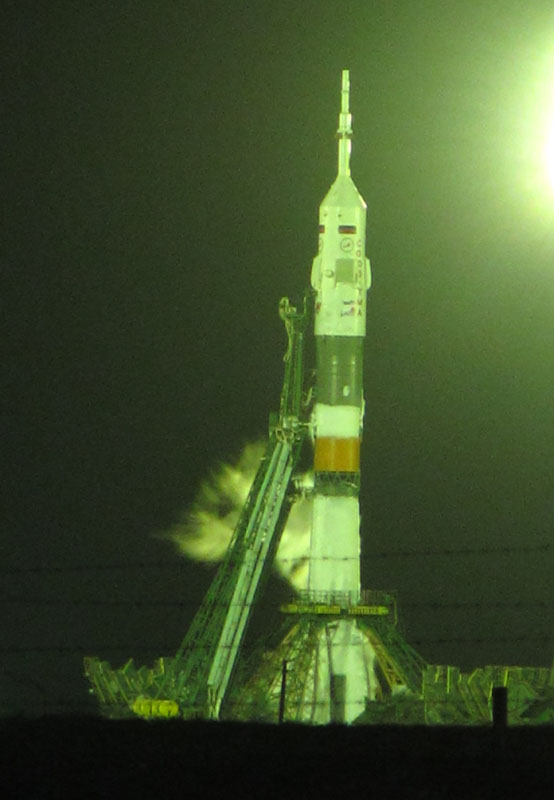
The tour companies make various claims about how far you will be from the launch. This will vary a little depending on which pad is used. The TMA-20 launch was from the Gagarin pad (hurrah!) and according to my GPS log, our observation point was 1.4 km (0.9 miles) from the pad. Which is pretty good.
We were allowed to drive over to the pad about one hour after the launch. We were allowed up to about 50 meters from the pad, so we saw the launch gantries up quite close. But (despite what the tour companies promise) we were not allowed near the flame pit and we did not get to feel any warm concrete!
In addition to the launch, as part of our tour we got to:
visit the Baikonur Cosmodrome Museum (which was great fun)
visit the Baikonur City Museum (rather less interesting)
clamber around on a Buran/Energia transporter vehicle (it’s #$%@ enormous)
walk around on the Buran/Energia pad (with an enthusiastic narrative from one of the Buran engineers)
visit inside the Soyuz assembly building (seeing boosters and an assembled launch vehicle)
visit the unexpectedly interesting International Space School, a local children’s school which just happens to be well stocked with original artifacts from the Soviet space program.
visit Gagarin’s cottage, Korolev’s house, the Gagarin summerhouse, etc.
visit various monuments in Baikonur City, including laying flowers at the Nedelin monument.
The tour was well organized and our guide was very helpful. At various of the sites there would be an on-site Russian speaking guide and our guide would translate.
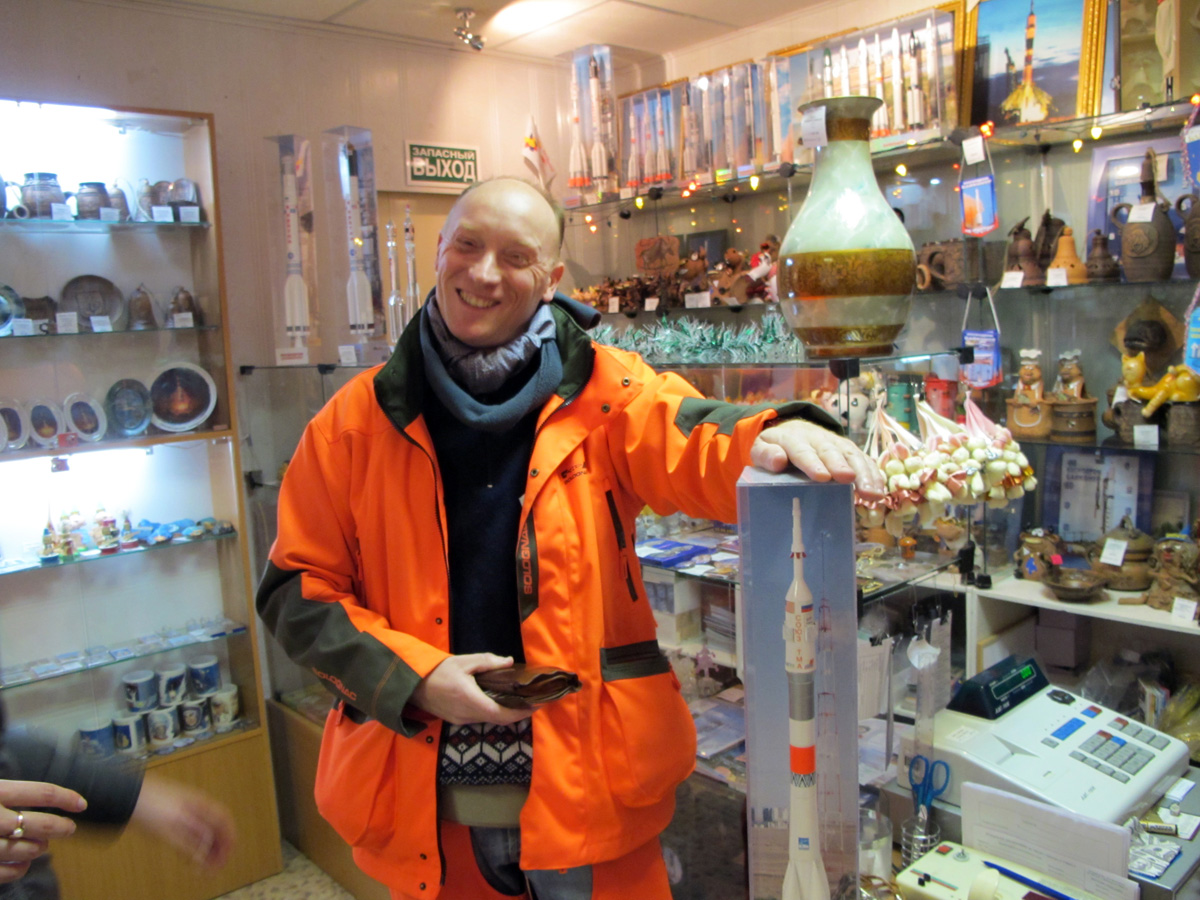
For souvenirs we were taken to Baikonur’s main market, where a few stalls sell mostly Kazakh souvenirs (e.g. hats and toy camels). Led by a very determined rocket-seeking Frenchman, we eventually hunted down a good selection of space related souvenirs (such as model Soyuz rockets) cunningly hidden in an optician’s shop. Take the Arbat about two blocks north from the main square, and look for a small optician’s about ten meters west down a side street.
Conclusion
Overall it was a really fun trip. If you are a space buff, I strongly recommend it!
If you are planning a Baikonur trip and have any questions, feel free to email me: “thewanderingscot” at the site “yandex.com” and I’ll do my best to answer.