The Wandering Scot

An occasional travel journal

  • Iraq Tour Logistics

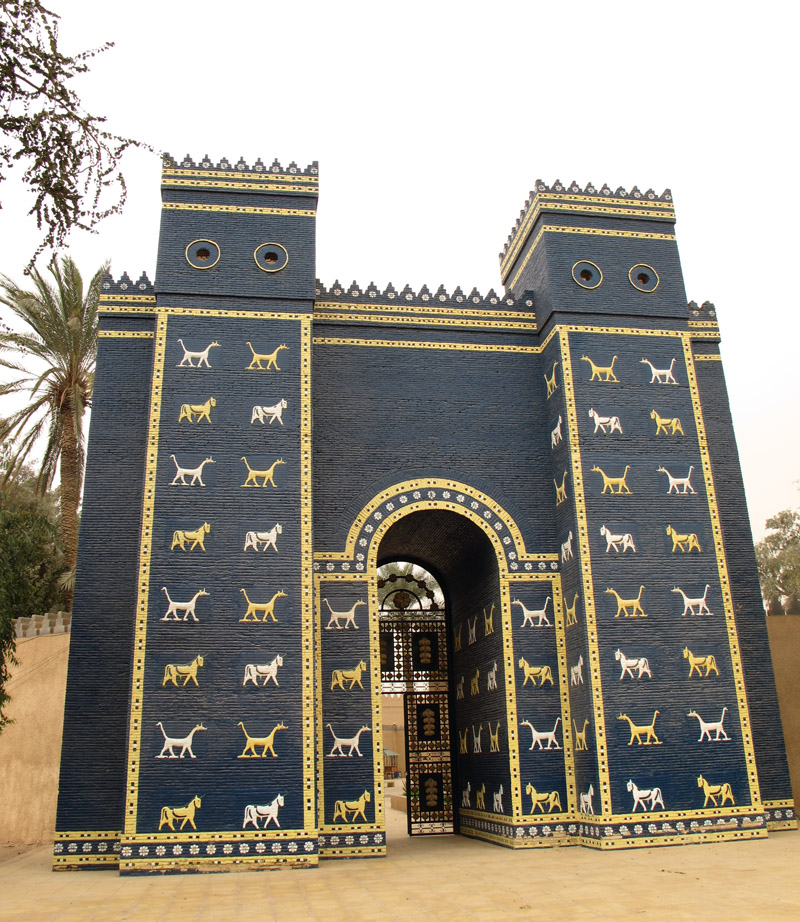
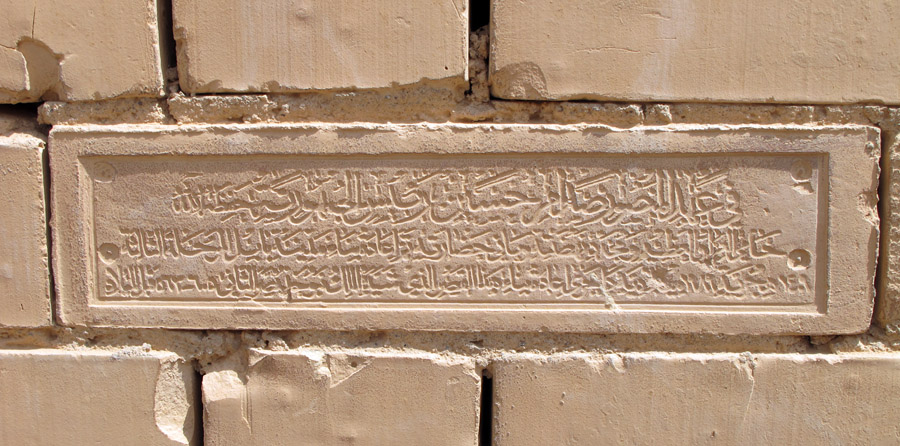
    Babylon: Replica Ishtar Gate

    I visited Iraq in March 2012 on a private archaeology-focused tour with Babel Tours. I had a great time! Here are some notes for anyone considering a similar visit.

    Visas and Permissions.

    Right now you cannot visit Iraq as an independent traveler. To get a tourist visa you must visit with an approved tour company.

    Babel Tours got me a tourist visa authorization letter from the Department of Tourism within the Ministry of the Interior. That letter (in Arabic of course) apparently both authorized me to receive a visa and authorized me to visit archaeological sites. (The letter was carefully checked at most of the sites we visited.)

    Ur Ziggurat

    I entered Iraq from Kuwait. I took a taxi from Kuwait City to the border and was stamped out of Kuwait without any difficulties. Basim and Muqdad from Babel Tours were waiting for me on the Iraqi side and helped me get a 30 day Iraqi visa issued. I was then stamped into Iraq.

    I exited from Baghdad into Kurdistan. To my surprise I did not need any new visa or passport stamps for Kurdistan – the Kurdish Regional authorities accept an Iraqi visa. On exiting from Iraq into Turkey I hit a minor snafu. The Turkish border post did not seem to be able to issue me the normal Turkish visa-on-arrival sticker. They very kindly stamped me into Turkey anyway, but later on when I exited Turkey at Istanbul, I got scolded “you have no visa!” before being allowed out.

    What and where:

    I was mostly in Southern Iraq (based in Nasiriyah) with a few days in Karbala and Baghdad.

    The archaeological sites I visited varied enormously in how much they have been “restored”:
    Uruk: Red Temple platform
    • Larsa and Lagash are mostly vast acreages of shards and a few large tells. There have been some excavations, but the excavators refilled their digs to preserve them. But still enormously old and interesting.
    • Girsu and Uruk have many exposed excavations with (presumably) some reconstruction, but nothing unseemly. The White Temple at Uruk is mostly just a few mud brick mounds on a giant mud brick platform, but Holy Mother of Wombats, it’s from 3000 bc. (Notes on Uruk.)
    • Ur is mixed. Some areas are clean excavations but the giant Ziggurat was “restored” in Saddam Hussein’s time with brand new facing bricks. But you can still find some sections of the original near the top. (Notes on Ur.)
    • Babylon has suffered a full DisneyLand “restoration”. There is even a shrunken replica of the Ishtar Gate. But even there, you can find many original sections lurking behind the scenes. And the site guide will show you “the very spot where Alexander the Great died”. (Notes on Babylon.)
    • At Ctesiphon the giant 6th century Sassanid brick arch is original, but one of the side buildings is a rebuild.
    Karbala: Imam Al Abbas Shrine

    Babel Tours also steered me to visit the Holy City of Karbala, where I visited Shia Islam’s most important pilgrimage site, the burial place of the Imam Hussein. This was both interesting and impressive: the Shrine is quite magnificent. We visited during Friday evening prayers when the Shrine was crowded with the faithful. The site authorities don’t see many tourists, so they aren’t yet tired of them, and were very welcoming.

    I spent two nights in Baghdad. The Iraqi National Museum is nominally closed for renovation, but exceptions are possible and we managed to visit several sections, including their main Assyrian rooms. (Notes on the National Museum.)

    Safety and Security.
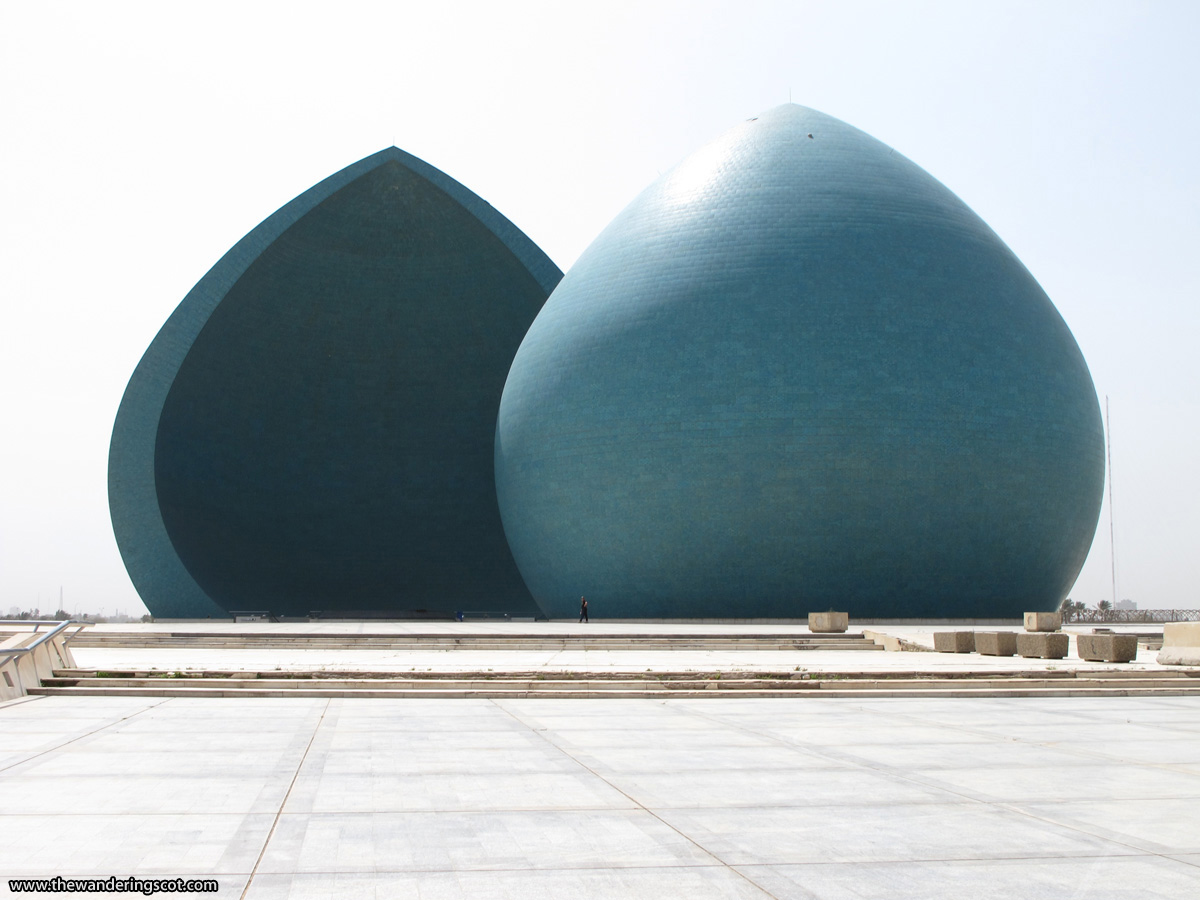
    Baghdad: Martyr’s Monument

    There are security checkpoints everywhere, but they mostly simply glance at you and wave you through. A very small number wanted to check my passport and visa. At most of the archaeological sites we needed to dig out my authorization letter from the Dept of Tourism and have that checked. (The authorities seem anxious to protect the sites, which is good.)

    I don’t want to over-generalize on safety from one short visit, but Southern Iraq definitely seemed very calm and placid, which fits with the news and what Babel Tours were telling me. Security was much tighter and more alert around Karbala, but lighter again in Baghdad itself.

    I reluctantly decided to avoid the Mosul area (Nineveh, Nimrud, Khorsabad) based on what I had been seeing in the news and advice from Babel Tours and others. I hope that will change.

    Practicalities
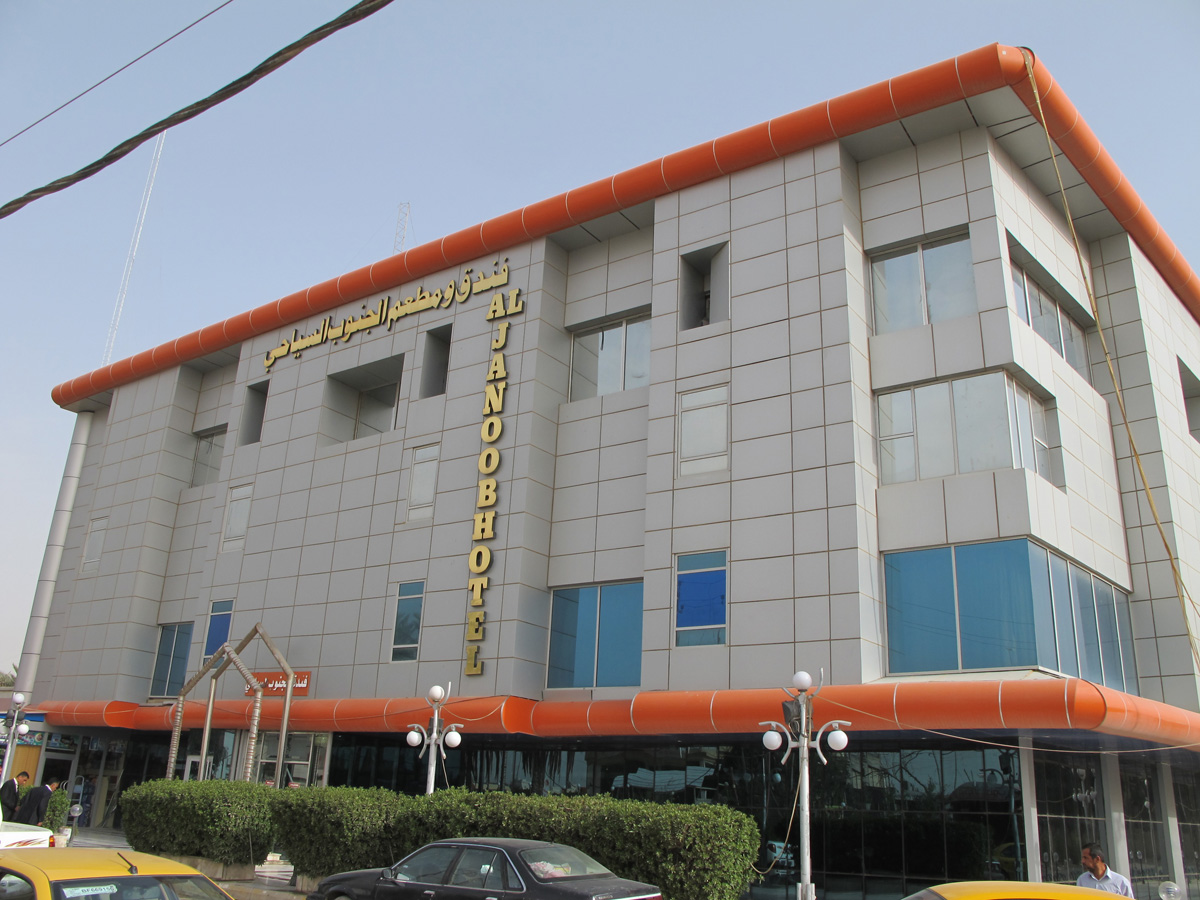
    Nasiriya: Al Janoobh Hotel

    There is no real tourism infrastructure in Iraq, so don’t expect Holiday Inns or Starbucks. Babel Tours put me in reasonable three star hotels and fed me lots of fine Iraqi food. It all worked well.

    I paid $5100 for a private one-person nine day tour. I expect it would cost significantly less per-head if there are several people in your group, or if you can arrange to join an existing fixed-schedule tour.

    Roads are generally high quality and the checkpoints only slow things down a little. One warning: traffic is generally busy and Iraqi driving is often “creative”. Baghdad in particular has severe traffic congestion.

    Nasiriyah

    Southern Iraq is quite socially conservative. The women in Nasiriyah wear all-encompassing black robes, plus headscarves, but with uncovered faces. I don’t imagine they expect that from a foreign woman, but covered legs and a headscarf might still be tactful, at least in the towns. Baghdad is quite different – most women wear headscarves, but a significant minority don’t.

    Conclusion

    It’s Mesopotamia! It’s currently safe. Just do it!

    Overall Babel Tours did a good job of helping me decide an itinerary, guiding me, getting me into “closed” sites, and generally looking after me. I would recommend them! The other main company I know of is Hinterland Travel – they are more targeted at fixed-itinerary mid-sized groups.

    If you are planning an Iraq trip and have any questions, feel free to email me: “thewanderingscot” at site “yandex.com” and I’ll do my best to answer.

    Update July 2013: Unfortunately the security situation is getting worse.

    As part of a wave of bombings across Iraq on July 14th, there was a car bomb in Nasiriyah which killed five people and another bomb in Karbala which killed four. There are also continuing serious incidents in and around Baghdad. Alas! Things seem to be getting worse and it’s no longer possible to regard even Nasiriyah as entirely safe.

    That said, the South is still vastly safer than Northern areas such as Mosul and incidents are still relatively rare. You are much more likely to see a traffic accident than a bomb. So it’s by no means crazy to visit, but I would strongly recommend making a careful and thoughtful assessment of the up-to-the-minute status before any trip. One option is to avoid Baghdad and to stick entirely to the South, entering and exiting from Kuwait.
  • Baghdad: National Museum

    Some sections of the Iraq National Museum in Baghdad are now open. (More PHOTOS.)

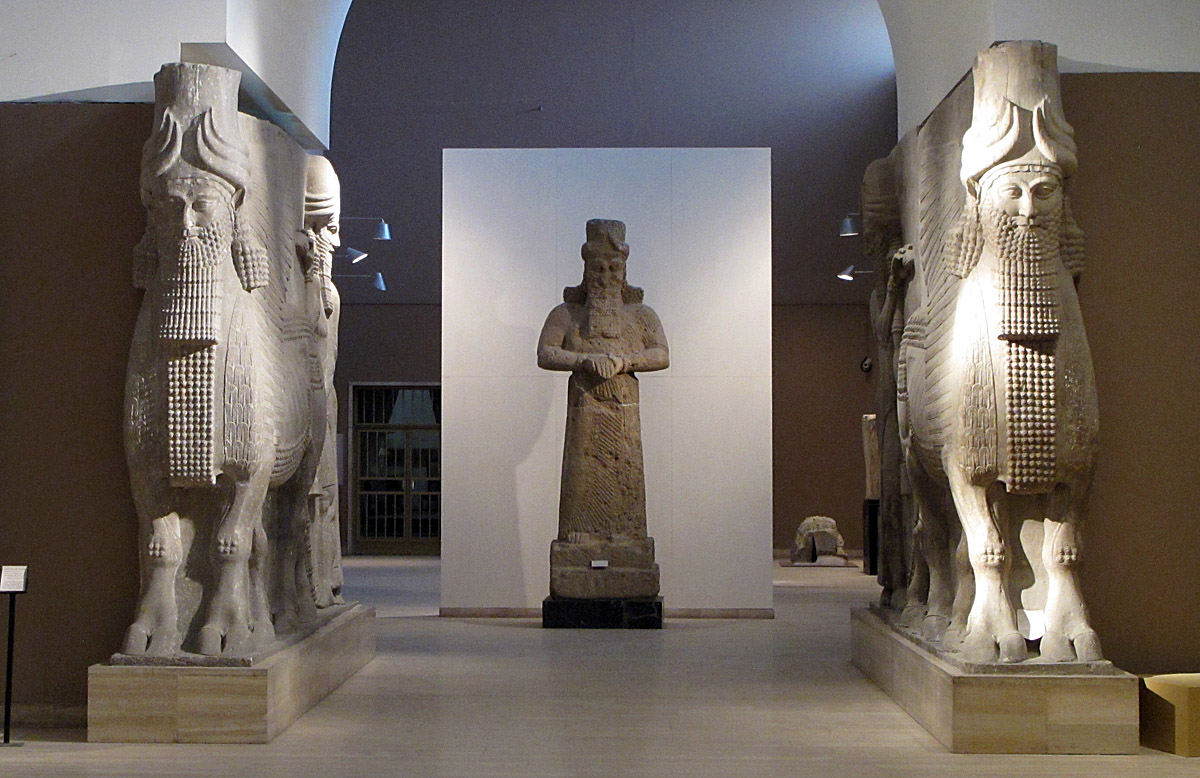
    Lamassu and Nabu, God of Wisdom and Writing
    Nabu, God of Wisdom and Writing, plus Lamassu

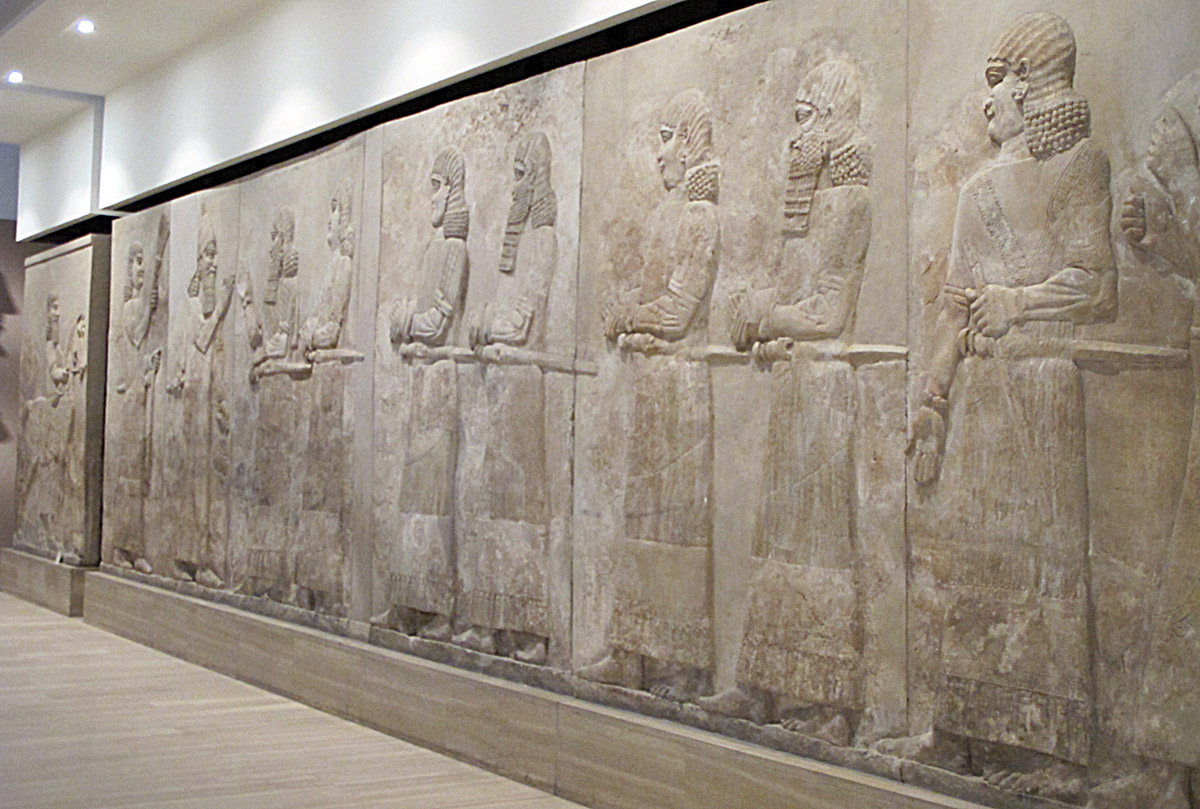
    The star exhibit is a stunning collection of Assyrian works from Khorsabad, including two enormous larger-than-life carved scenes of courtiers bringing gifts to the King, two giant guardian Lamassu, a large statue of Nabu the god of Wisdom and Writing, and much more.

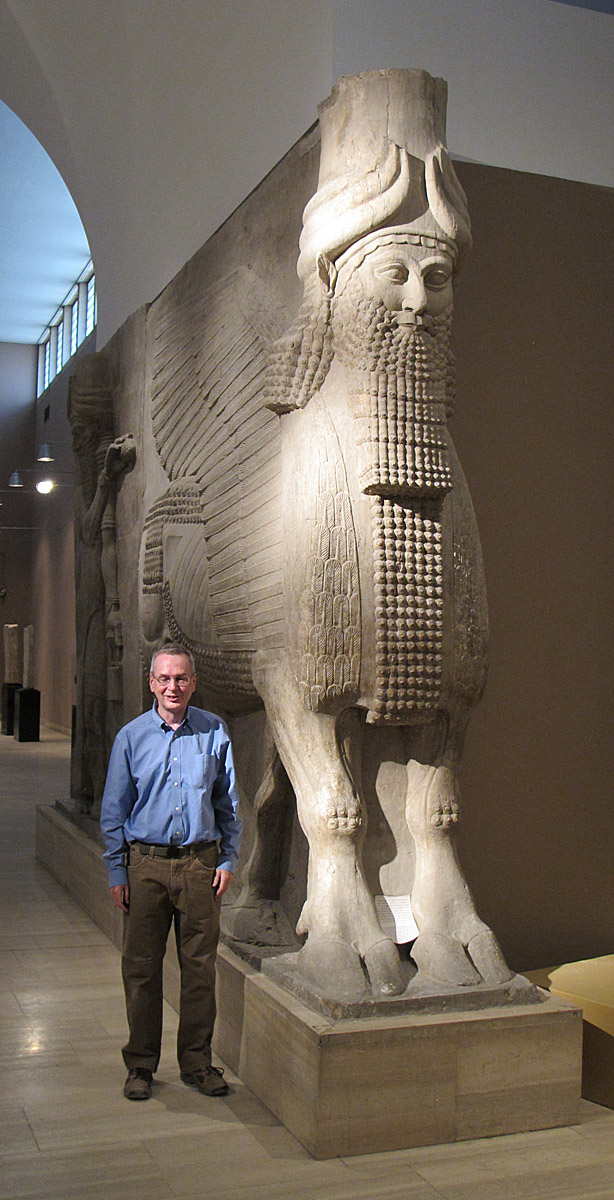
    Lamassu
    Lamassu
    Mini Lamassu
    Mini Lamassu

    Lamassu are Assyrian winged bull or lion guardian figures, with Kingly human heads, typically positioned to guard gateways. The gods have wisely provisioned them with five legs, so that they appear stable when viewed from either the front or the side. I was greatly struck the first time I saw the ones in the British Museum. I’ve now seen others in Paris, Chicago, New York and Persepolis, so it was great to finally see some in their home land of Iraq. The Khorsabad hall has both the two giants and a mid-sized pair. An earlier Assyrian room has a very unusual pair of miniature Lamassu, each only about three feet high. The right-hand one in particular is very well preserved and a delight to see.

    There is much more in the museum: I was led through halls of statues from 1st-3rc c. Hatra; of assorted Islamic coins, artifacts, and decorations, of small scale Assyrian pieces (some of very high quality) and a few older Sumerian pieces. I was allowed to briefly poke my nose into a room still under renovation where Assyrian ivories and other high-value items are being prepared for display.

    Courtiers Greet the King
    Courtiers Greet the King

    Unfortunately the Museum isn’t yet generally open. My guide (Basim from Babel Tours) takes in small groups fairly regularly and was able to get us admitted. We had the place to ourselves! I hope the various renovations complete soon and the Museum becomes fully operational.

    (More Tour Notes on Iraq.)


  • Ancient Babylon Rebuilt!

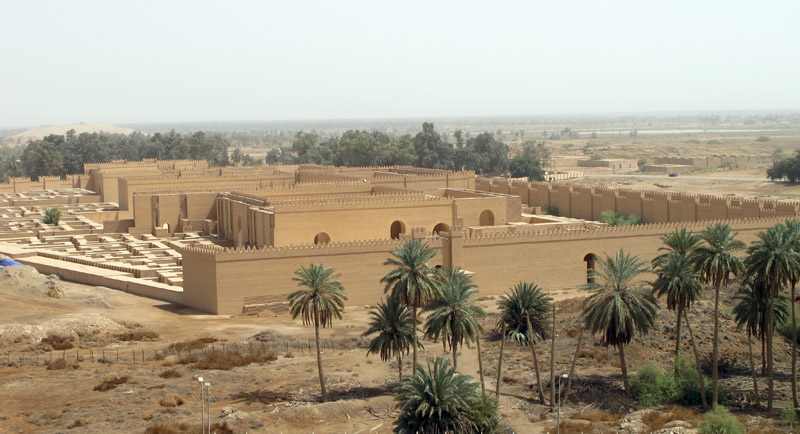
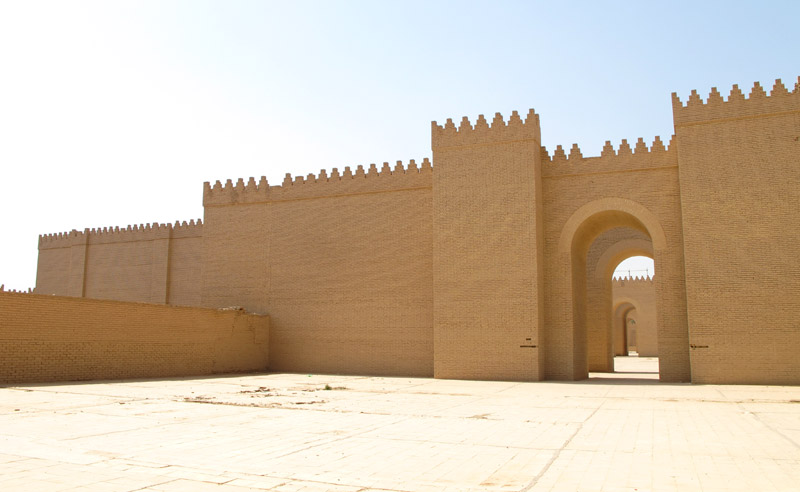
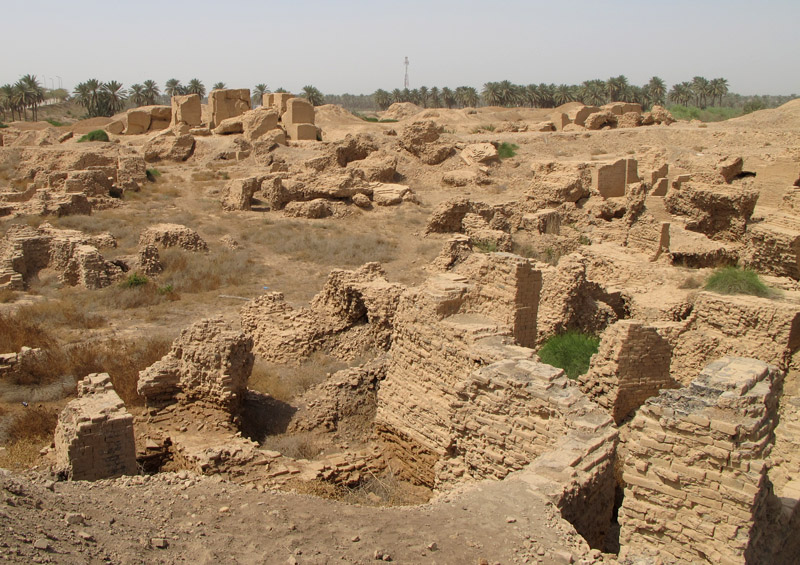
    At first glance the Babylon site is a strange Disneyland vision of what Babylon ought to look like, with impossibly pristine new brickwork and fanciful towers and ramparts.  Just as though some Wizard has cast a magical “rebuild” spell.  But much of this fanciful reconstruction is built on original foundations.  Our site guide pointed at various pieces of the lowest levels of the walls as original, including the now mostly buried upper arches of old gates.  But while the bricks may be original, even those sections had clearly suffered extensive reconstruction and renovation.

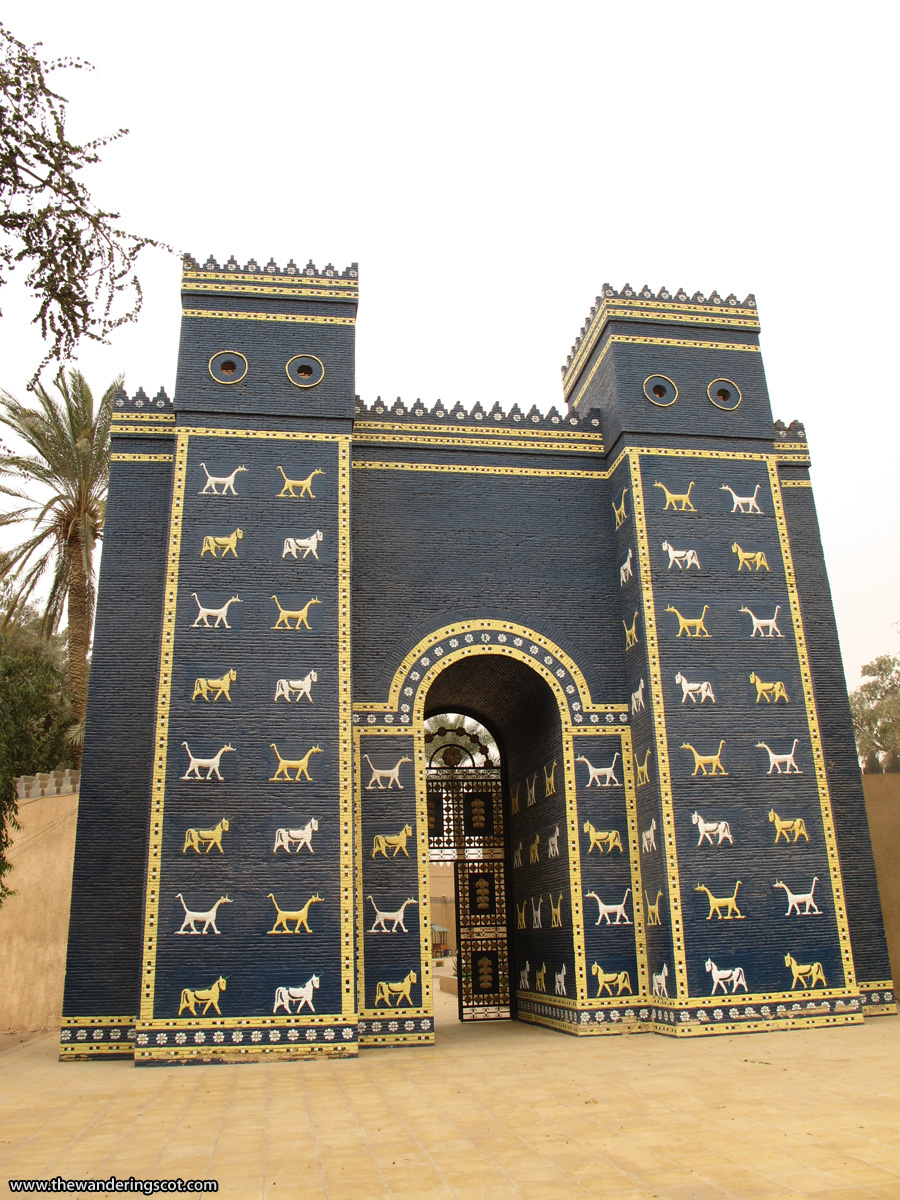
    We started at a small scale replica of the original Ishtar Gate.  This is good fun, but it’s a surprisingly low quality painted brick affair and is not a fair advert for the very impressive (albeit aggressively restored) original version now in the Pergamon Museum in Berlin.  Then we moved to the heavily renovated original gate foundations, mixing old and new bricks.

    The grand Processional Way is mostly new, but includes a few old bricks, some with the original Babylonian cuneiform stamps.  The embossed brickwork dragons and lions are entirely modern, plain replicas of the colorful glaze brickwork originals now mostly in Berlin.

    Many larger interior sections are similarly reimagined, with a grand new temple and several vast rambling palaces.  But, at least in theory, this is all rebuilt on the original site groundwork.  To add even more confusion, some of the surviving original brickwork sections have been given modern overlays to both protect and prettify them. We saw one spot where the modern plaster had peeled away, revealing ancient bricks.

    Our guide led us to a palatial Throne Room and told us this is the exact spot where Alexander died, in 323 bc.  Maybe true, maybe not, but a big “gulp” anyway.

    We entered one section that was supposedly a reconstruction of a defensive maze.  Here occasional bricks are grandly stamped in Arabic with Saddam Hussein’s name.

    Further in, past the Disneyland rebuilds, there is a large area of (apparently) authentic undisturbed original ruins, with large chunks of mud brick walls and buildings.

    On a rise next to the site is one of Saddam Hussein’s palaces, with good views over the Euphrates.  This is a finely built palace, now much decayed, with grand reception rooms, now vandalized and covered with Arabic graffiti.  Two of the bigger rooms had been adopted as convenient skating rinks by groups of in-line skaters.

    I’m traveling in Iraq on a private tour with Babel Tours. It’s been good fun. I recommend it! (Tour notes.)


  • Uruk

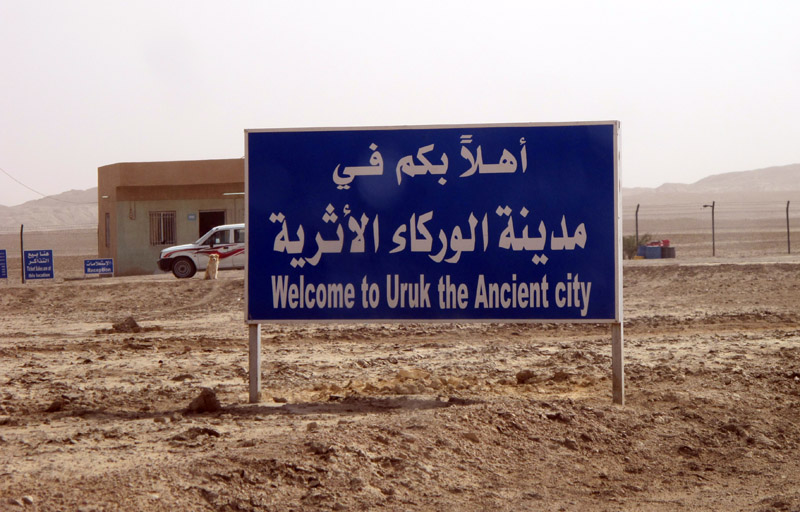
    The Uruk site is well organized, with large explanatory signs, a strong perimeter fence, and (wonder of wonders) an actual ticket office, which doubles as a guard post.  We were the only visitors of the day so it took a few minutes to round up the ticket seller.

    Uruk was the first great city, the home of writing (!), prospering from around 4000 bc onwards.  The site was also occupied by many successor civilizations, so there is a wide range of material, from early Sumerian to Seleucid and even Parthian.

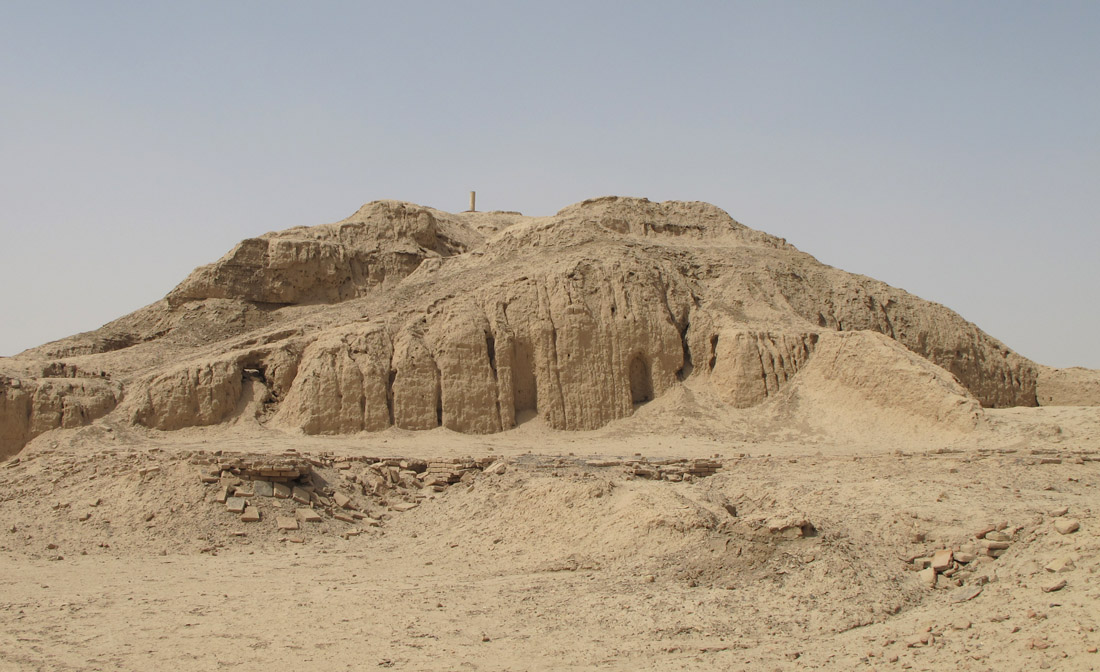
    Uruk, Red Temple
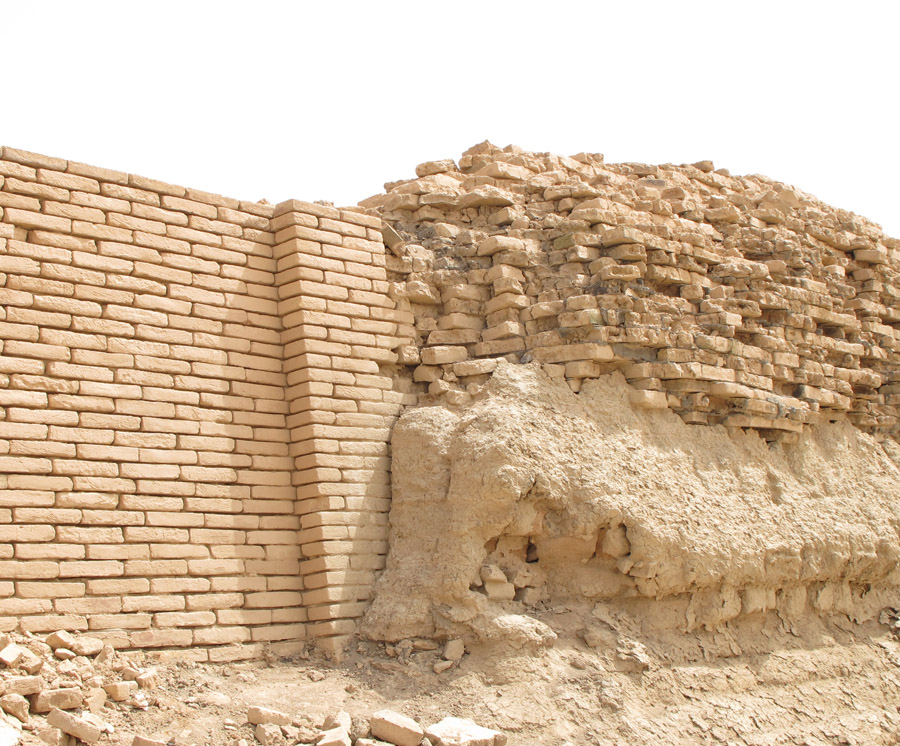
    Red Temple Mound

    The site covers about 7 sq km, with many acres of scattered shards, occasional lumps of mud brick, and two major temple mounds.   As we walked, our site guide pointed out a mud brick wall from the time of Gilgamesh; many mud bricks with Babylonian cuneiform stamps; a mud brick with a much simpler early Sumerian cuneiform stamp; and much more.  Frequently Sumerian and Babylonian and Seleucid work is all intermingled.

    White Temple (~3000 bc)

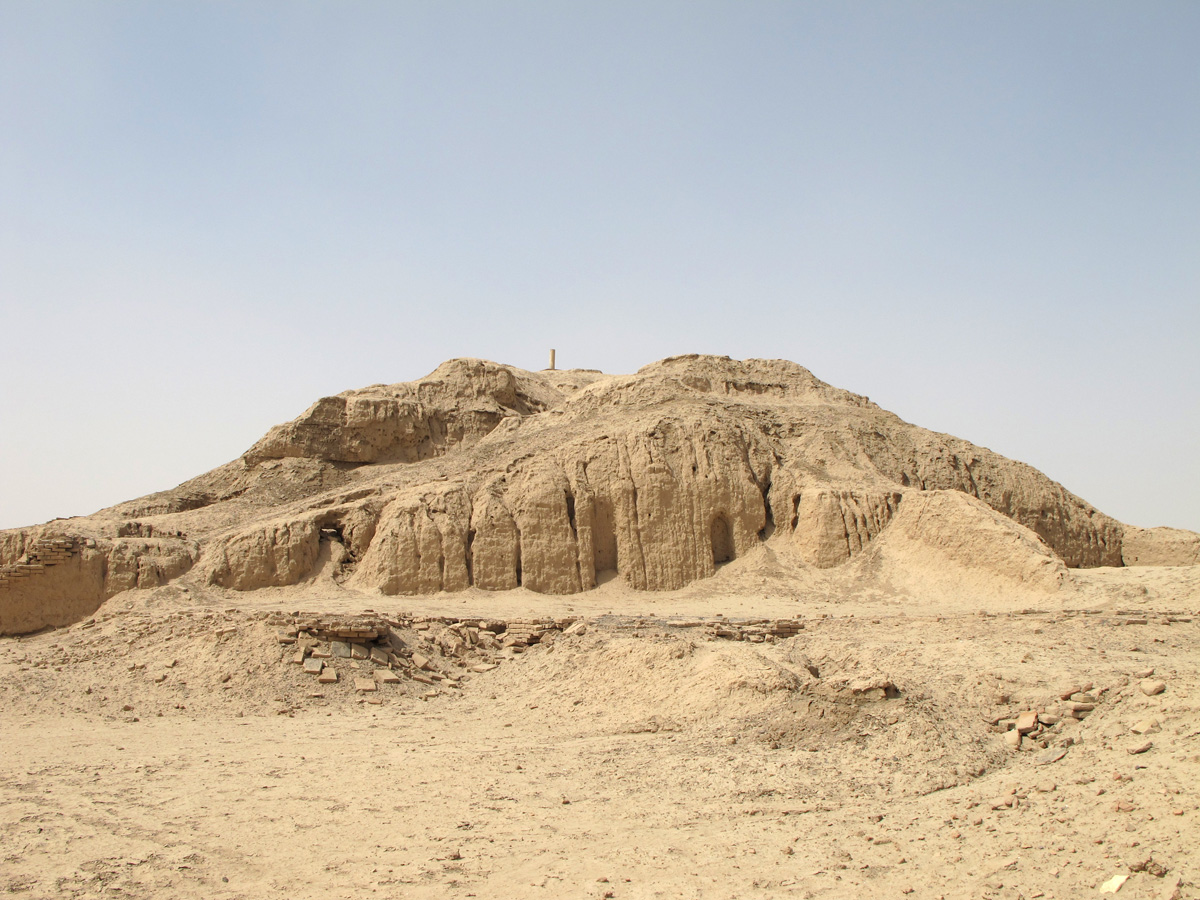
    The most prominent mound is the mud brick platform of the Red Temple (around 3100 bc), distinguished by a modern concrete marker pillar on top.  Alas, almost nothing visible remains of the temple itself.

    The White Temple aka the Sky God Temple, from 3000 bc is also at the top of a tall mud brick platform.  The temple is now only a few low mud brick mounds, perhaps from pillars or a wall.   But given its vast age, any remains at all are still damned impressive.  I thanked the Sky God for sending me reliable GPS and prayed for better wireless internet.

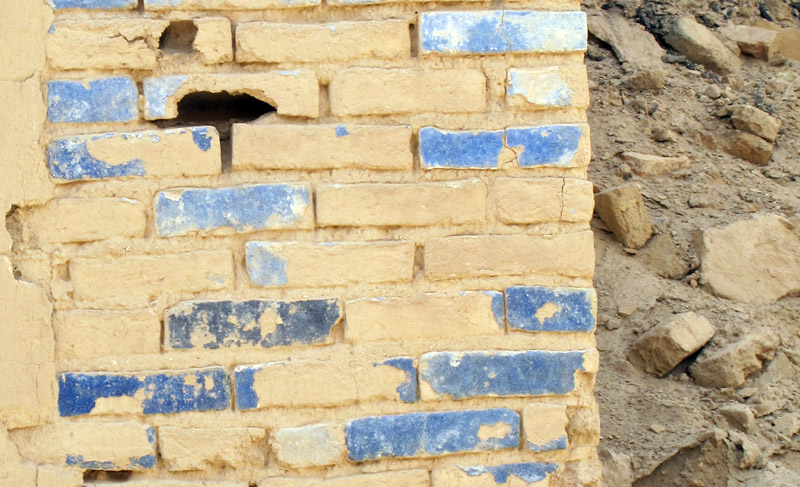
    We also visited Agee Gal, a very large Seleucid Temple.  Only the two ends have been excavated – a long central section is still untouched.  A few of the exposed bricks have the original bright blue glaze akin to the Ishtar gate, but most of the glazed bricks are very faded.

    I am in Mesopotamia in placid Southern Iraq (yes this part of Iraq is genuinely safe) on a private tour with Babel Tours.  (Tour notes.) If you are seriously interested in ancient history I recommend a visit!


  • Ancient Ur

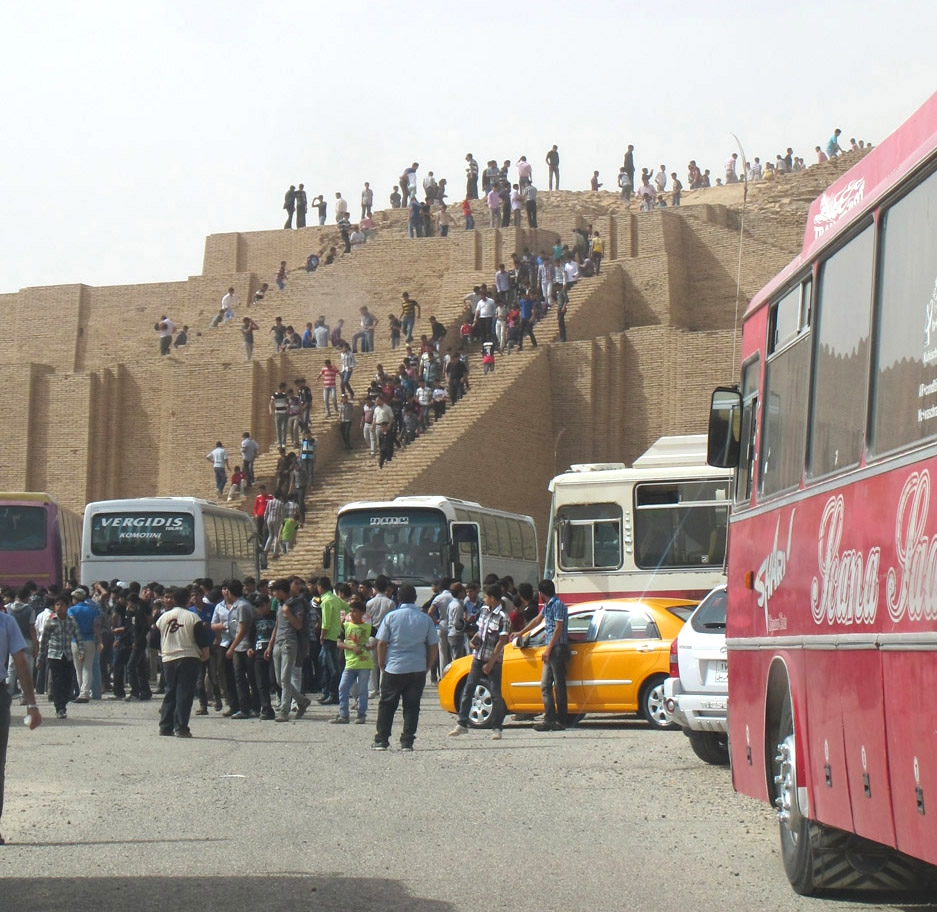
    There are very few tourists in Iraq at the moment, so I was expecting the ancient city of Ur to be almost deserted.  But no, as we approached the great ziggurat, we saw about 40 tour buses parked and hordes of teenagers cavorting around the site.  Say what?

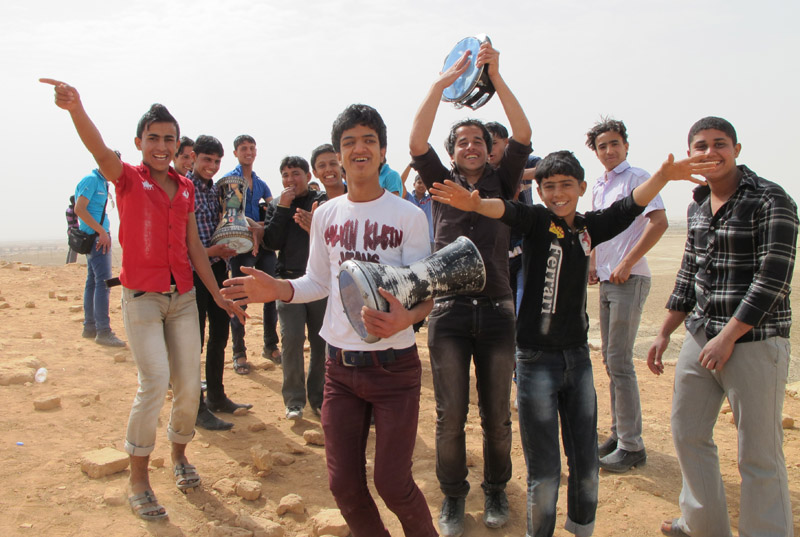
    It turns out it’s the last month of the school year, and ancient Ur is a favorite site for local school outings.  (This seems like a good thing!)  The younger kids also found a visiting Scot a fine additional attraction, so I had to dutifully pose for some group pictures.

    I’m glad they were having fun: drumming, dancing, and maybe even absorbing a little history.  But it was also kind of a relief when the buses moved on and we really did have the site to ourselves!

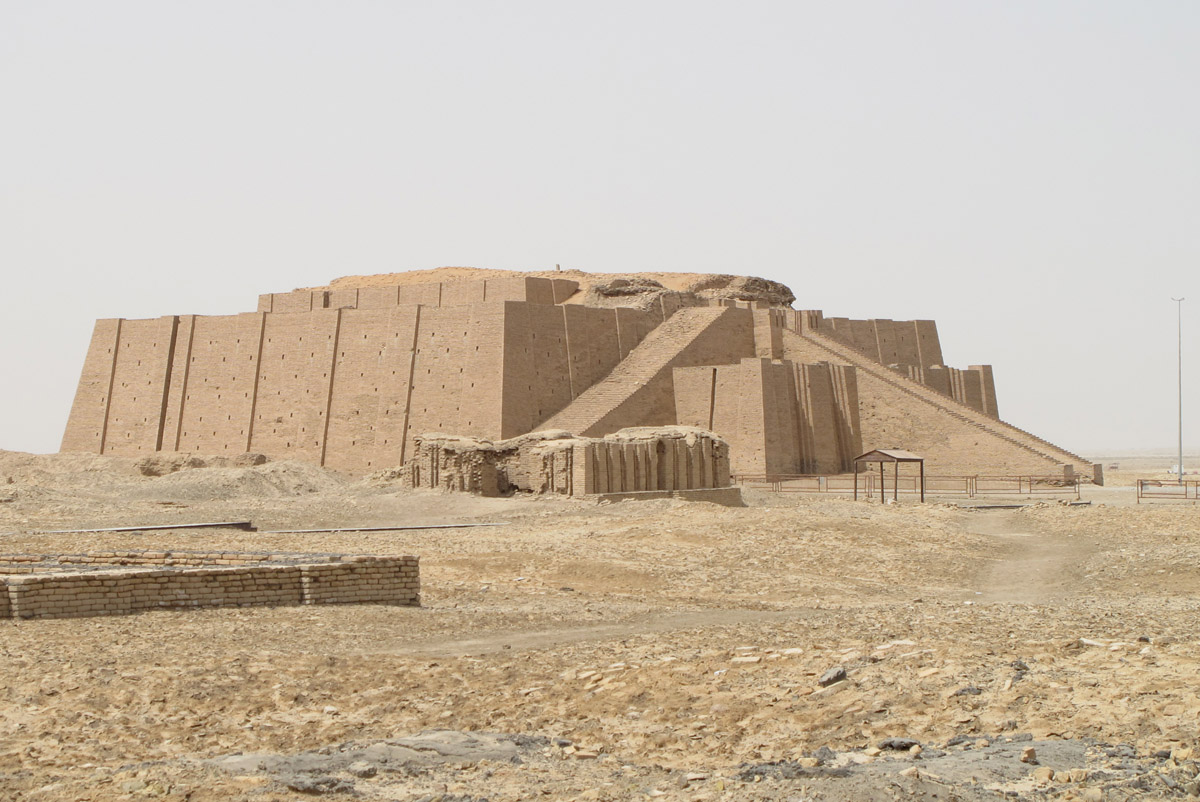
    Ur is very ancient, but the ziggurat, is from only (!) around 2100 bc.  Unfortunately it has suffered aggressive modern restoration.  The ziggurat core is original, but almost all the outer facing and stairs are an imaginative reconstruction.  Near the top, some of the ancient brickwork is visible.  Both old and new brickwork was built with included layers of asphalt for water-proofing and flexibility.

    At a few places near the top it’s possible to see the pristine new “restored” walls melding into battered original sections.

    There are a number of other excavated buildings, including the Royal Cemeteries of Ur and a large (reconstructed) residential building, rather optimistically identified as “Abraham’s House”.

    And here are some overall tour notes.


  • False Dawn in Murmansk

    Murmansk false dawn, in early afternoon.
    Murmansk false dawn.

    I was in Murmansk for the Winter Solstice.

    The city is North of the Arctic Circle, so the sun never actually rises in mid-winter. I had been vaguely expecting that I would be encountering a 24 hour night, but no, the sky was actually a bright twilight from about noon to about 4:00pm, as the sun lurked just over the horizon. In mid afternoon, the rosy fingers of a false dawn even made an appearance to the South, before gently fading out again.

    "Alyosha". Still guarding Murmansk.
    “Alyosha”. Still guarding Murmansk.

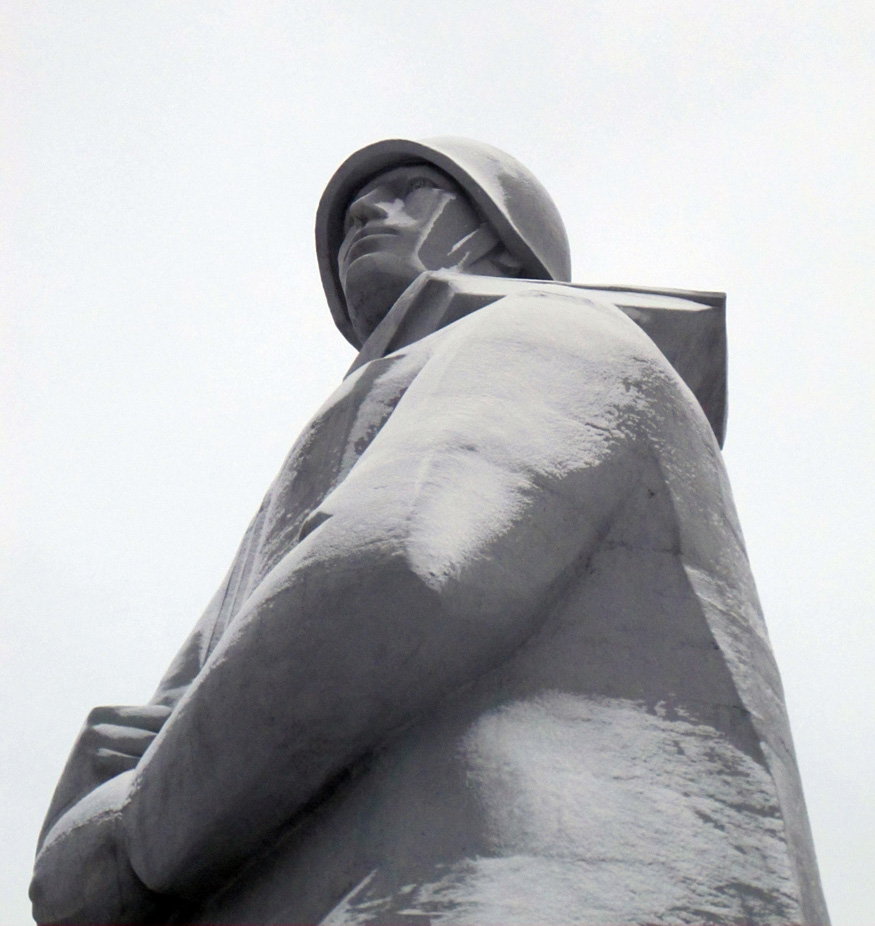
    Murmank hosts a fine resolute Lenin, the charming Museum of the Northern Fleet, and a strangely poignant 30 meter high concrete statue of a Soviet WWII soldier, nicknamed “Alyosha”, still resolutely watching the skies for German bombers.

    I had arrived by train from St Petersburg and I took a local minibus over the border to Kirkenes in Norway. The Norwegian border officials asked various slightly strange questions (“Where is your Norwegian exit stamp!?”) and did a particularly thorough search of my pack. I only realized later that they had assumed I must be returning from a short trip from Norway into Murmansk and so they became very suspicious when I denied having any Norwegian exit stamp. Sigh. Normally entries to Western Europe on a UK passport are easy, so this caught me by surprise.


  • Grozny

    On my way from Vladikavkaz to Astrakhan, I stopped off in Grozny. I’m not sure what I expected from Chechnya, but it wasn’t this.

    Almost all the buildings in central Grozny are new, built after the devastation of the second Chechen War.  But there is now another enormous new wave of construction under way, with several multi-storey towers and many, many blocks of new low rise buildings.  I wandered through what felt like an endless construction zone.  It isn’t all prestige fluff either – there seem to be many well constructed new apartment blocks too.

    People in Grozny seemed slightly surprised to see a tourist, let alone a foreigner from exotic “Shotlandiya”, but they also seemed pleased and welcoming.

    The city has a very different feel from most of European Russia.  This is definitely an Islamic city, with most women wearing headscarves and many men wearing muslim caps.  And on Friday afternoon there was a large crowd coming out of the grand new mosque.

    Chechnya, and Grozny in particular, seems to be going through a relatively stable period at the moment.  (The key word being “relatively”, there are still periodic incidents.)  There is a lot of armed security sprinkled around the city, but it is generally low key.  The city feels bustling and prosperous.

    It’s worth a visit.  More Grozny photos.

    Practicalities: I came in by marshrutka from Vladikavkaz via Nazran and took the very slow 602C train out to Astrakhan.  (Note that at Nazran the Grozny marshrutkas arrive/leave at a separate bus stand about 1 km South of the main bus station.) I stayed at the pleasant and friendly Hotel Arena City.

    Hotel Arena City Security Guards
    Hotel Arena City – Night Watchmen

    I checked out of the Arena City before dawn, so I got to meet two of the night-time security team.  They had stopped in for a quick tea break while two more armed guards patrolled outside.  While Grozny is mostly stable these days, this is still the North Caucasus, so I guess a little extra security isn’t too surprising.