The Wandering Scot

An occasional travel journal

  • “Baggage Thieves Stole My KitKat!”

    I’m travelling in South-West Africa.

    At Luanda Airport arrivals, my bag arrived late, all by itself, which was rather suspicious. When I opened it, it had clearly been aggressively rummaged through.  I don’t carry any valuables in there, but to my dismay I discovered my Emergency Snack Supplies had vanished!

    Yes, the baggage thieves had stolen a KitKat and some Fig Newtons. The dogs!  But I guess even baggage thieves like to “have a break and a KitKat”.

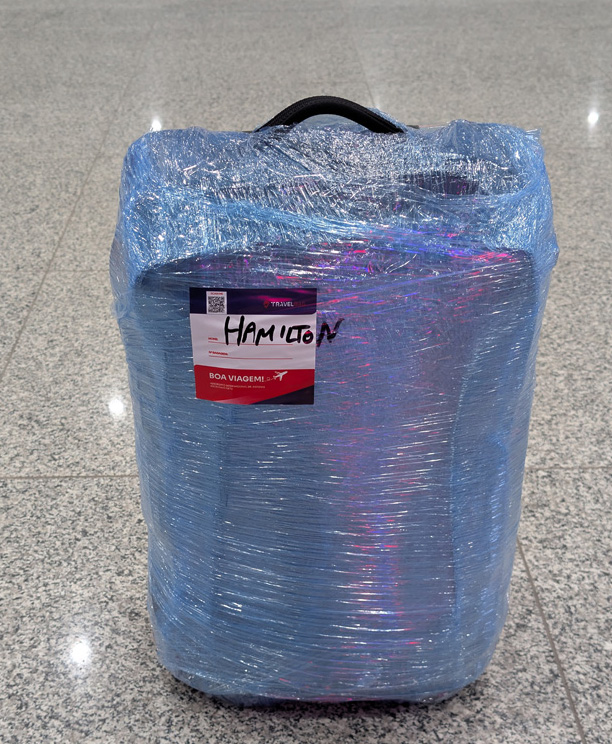
    Since I had to fly back out of that same airport, I resorted to having my bag film wrapped. Which looks silly and won’t stop a determined thief, but it does at least help my bag blend in with many other similar ones. Grump.

  • Namib Desert

    I’m on a short excursion to the Namib desert.  This is the tail end of the rainy season and there was a lot of rain last week, so there was a lot of green around the edges of the desert and the Sand Sea itself was somewhat muddy.  But there was also a lot of real sand and imposing pinkish dunes.

    The area is definitely very scenic, with a contrast between a ground level of scrubby green, pink dunes, and blue skies.


  • Fiji: “Tour to Cannibal Cave With Lunch”

    I’m on a short stopover in Fiji.

    Inspired by some friends’ recent trip, I signed up for a “Tour to Cannibal Cave With Lunch”.  This one went into the Naihehe Cave, supposedly a tribal refuge and sacrifice center, where many people were killed in a final stand in the 19th c. 

    I was a little nervous about the tour, but I saw there was one very plump lady on it, so I thought I’d be OK.

    Visiting the cave requires wading in through a very low, very defensible, entrance, but then widens out into a large rambling system, with some fine limestone formations, including the so-called “Cannibal Oven”.

    Lunch was OK, although the meat tasted suspiciously like beef.


  • Nauru: WWII guns, an aggressive dog

    The Pacific island nation of Nauru fits conveniently in a single photo.  It has scenic limestone spires, lots of greenery, and a central area devastated by phosphate mining,

    There are various WWII artifacts scattered around.  I had to search in wild forest to hunt down one particular Japanese six inch gun.  While I was trying to find a way back to the road, a guard dog expressed the strong opinion that I was getting too close to her family’s home.  Growl, growl, bark, bark, etc.  But waving a large stick deterred her and I thought I’d passed safely by.

    But then I unwisely turned my back (a classic mistake) and she ran up behind me for a Parthian bite.  Sigh.

    Yep, a deep bite in my lower calf through my hiking pants, oozing blood.

    So I drove to Nauru’s (only) health center, the RON Hospital.  A nurse and then a doctor saw me quickly.  They assured me there is no risk of rabies or lycanthropy, but gave me a tetanus booster and a supply of antibiotics.  Healthcare on Nauru is free for residents, and they happily applied that to me too!

    All’s well that ends reasonably well.  I am still annoyed that I let myself get sucker-bitten by the Bad Dog, but I was impressed by my encounter with the local Hospital 


  • Yap: Land of Stone Money

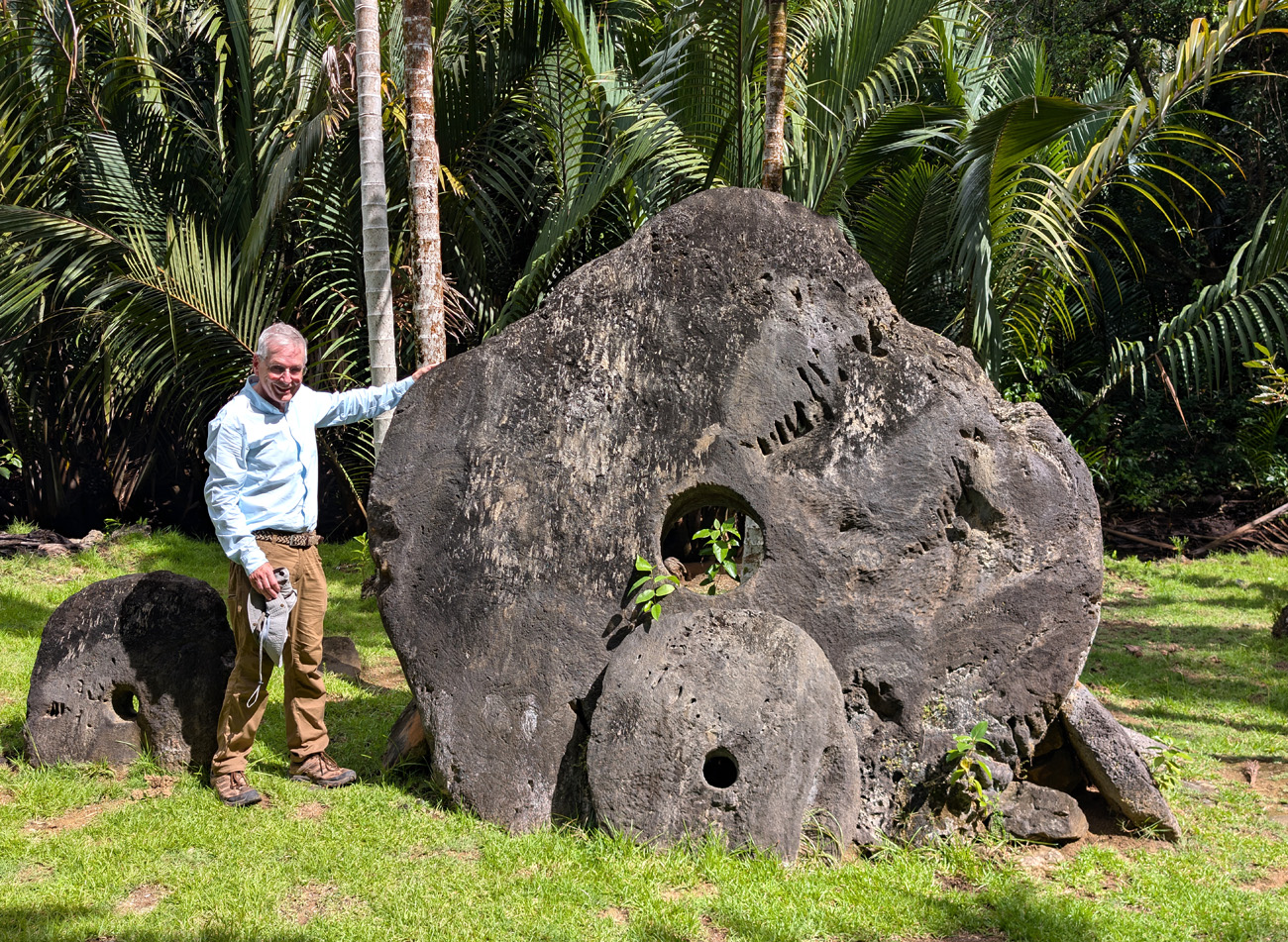
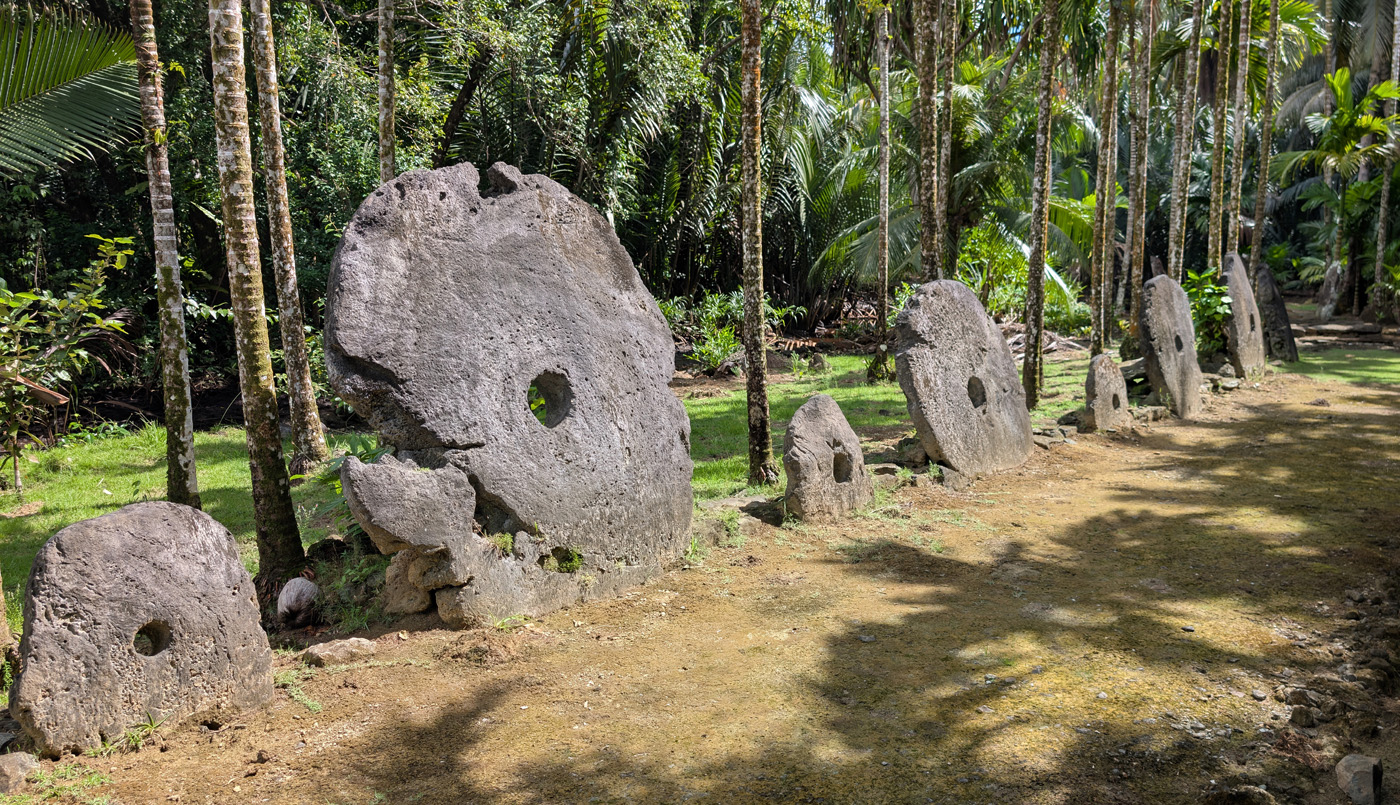
    Last week I was on Palau, where I visited a Yapese quarry site. Today I’m 280 miles away on Yap itself, inspecting the resulting money hoards.

    There are hundred of surviving “coins”, ranging from 2′ to 8′ across. Some are held communally and displayed in village Money Banks. Some are held by families and displayed in front of houses.

    Among the surviving stones, a very few seem to be shiny marble-like rock and maybe that’s how the whole craze started. But many seem to be rather dull gray, even under the weathered surface.

    The true history of the stone money is hard to figure out. They seem to have originated about 500 years ago as rare prestige items, obtained with great effort and great risk from across an ocean voyage. As with many status items, there seems to have been a subsequent social one-upmanship pressure to obtain more, bigger, and better ones.

    Presumably the prestige came from the great effort of having quarried and fetched them all the way from Palau. So when David O’Keefe started mass production and importing in the late 19th c, the prestige evaporated and the bottom dropped out of the market.  I suspect many of the larger surviving coins are from the O’Keefe phase, but it’s hard to tell.

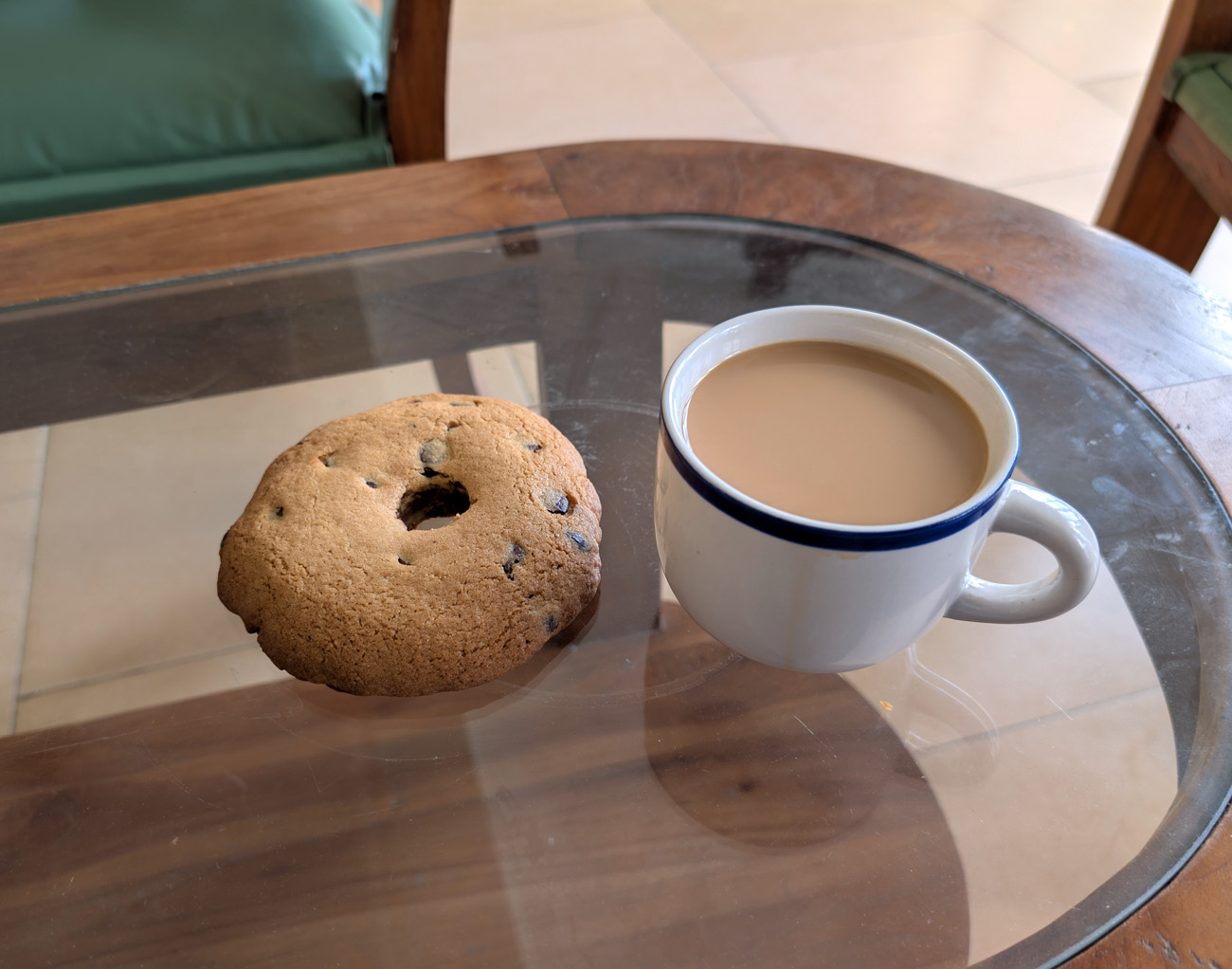
    P.S.  Since I had been a good and diligent tourist, my hotel rewarded me with a Stone Money Cookie with my lunchtime coffee.  🙂


  • Palau: Stone Money Quarry

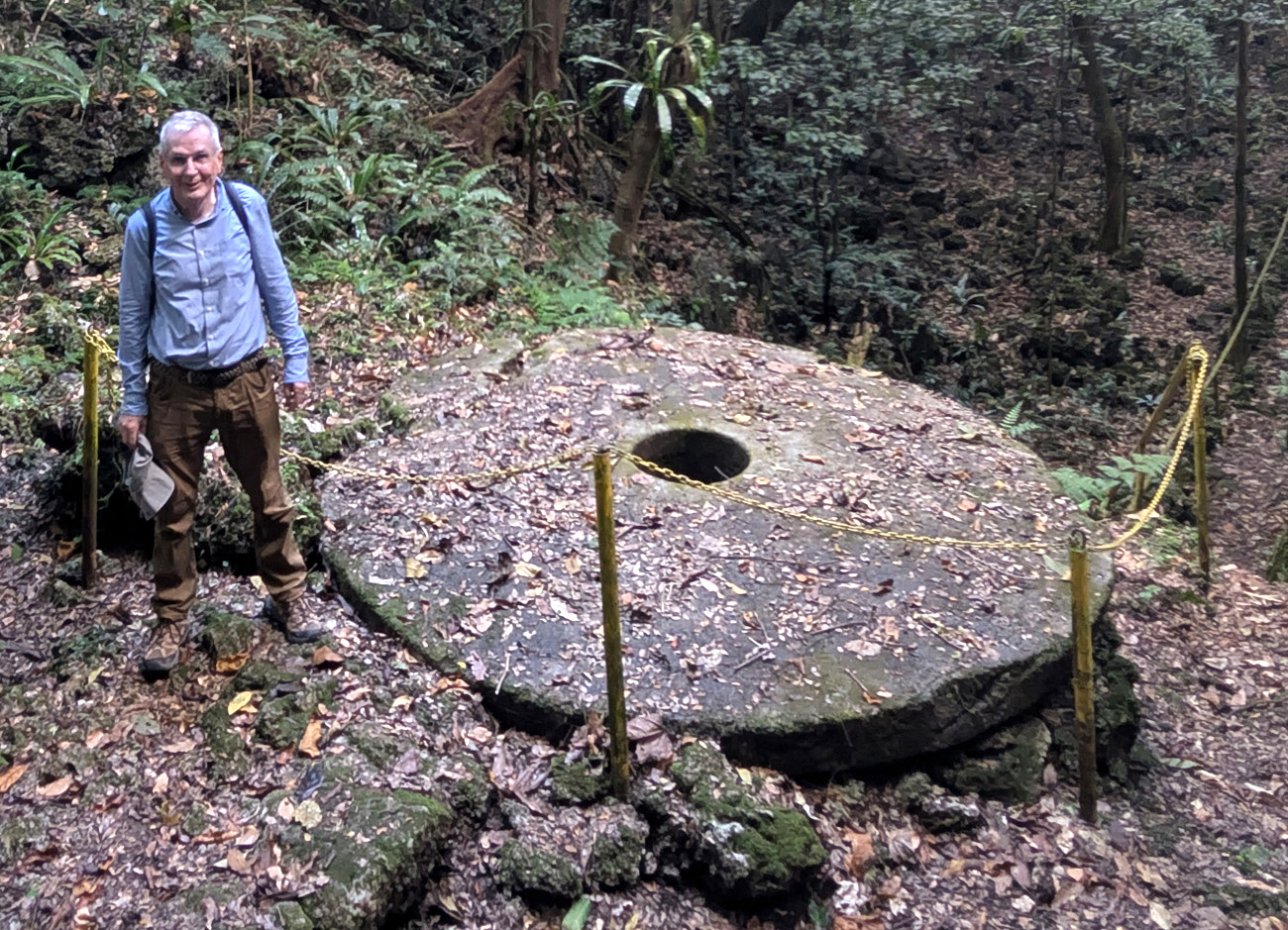
    I’m on the Pacific island nation of Palau.  Today I was out at the Yapese Quarry at Metuker er a Bisech, where centuries ago brave seafarers from Yap came to quarry out limestone for use as Stone Money.

    One giant piece of money was damaged on the way down from the quarry and lies abandoned. Higher up the trail is a large limestone cave that was supposedly the quarry site.  This has fine stalactites and other scenic limestone formations.  The money was either quarried here or (more likely) on limestone outcrops nearby.

    Centuries back, carving out the stone money and transporting it across 280 miles of open ocean by canoe to Yap was a very arduous and risky venture, justifying the high prestige value associated with the stone money. But by the latter half of the 19th century, modern metal tools and sailing ships made the money both much easier to quarry and much easier to transport. So there was a boom in production. And then an inevitable bust, as the supply outweighed the demand and the perceived value of new money fell.

    Practicalities: You need a boat and guide to reach the quarry.  I had trouble finding a tour company which could arrange this for me.  I thought I had made a reservation with Palau Explorer, but that fell through.  So this morning I went into the Palau Visitors Authority office, who were really helpful.  They contacted an operator and arranged a private tour “if you can leave right now!” for $150.  When I went to the pickup point, it turned out the operator was actually the same Palau Explorer who I’d been trying to contact originally.  Oh well, I guess they had some kind of scheduling conflict.  Anyway, the trip worked out fine in the end!


  • Haiti: Cap-Haitien

    I’m on a short trip to Cap-Haitien, Haiti.

    Cap-Haitien is in the North of Haiti, well away from the troubles in Port-au-Prince. It is tolerably safe and also has some of the most interesting historical sights in Haiti, from the time of the Haitian Revolution, when the slaves overthrew the French and established a free black state.

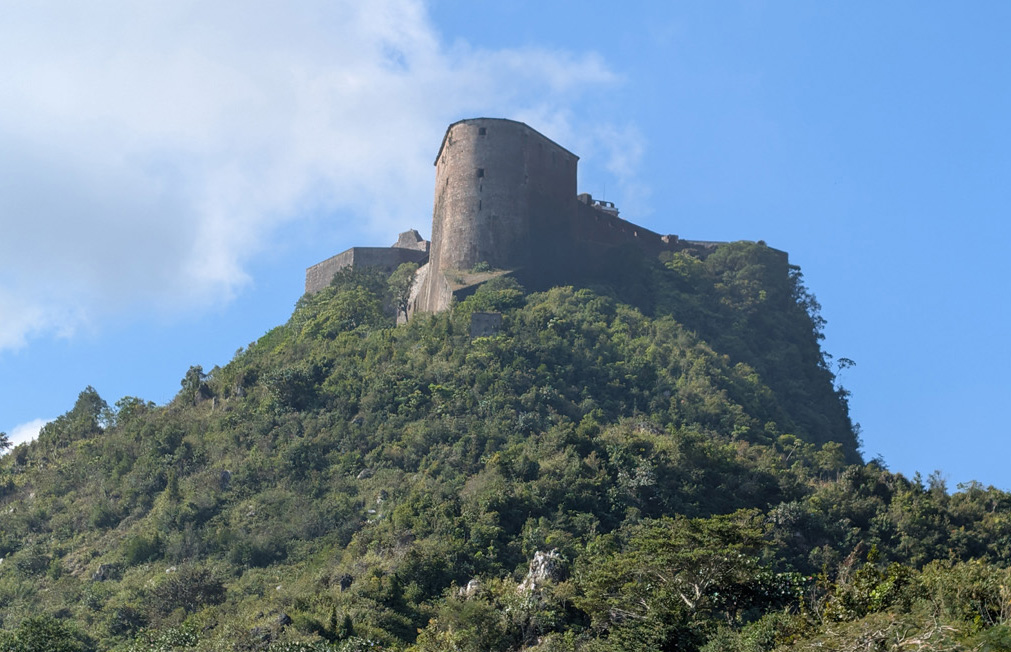
    The #1 target on my list was Citadelle Laferrière, which was built by King Henri I (née General Henri Christophe) around 1820 to deter a French return. It’s seriously impressive, perched on top of a mountain, with giant walls, and with more that enough cannon to deter any sane general.

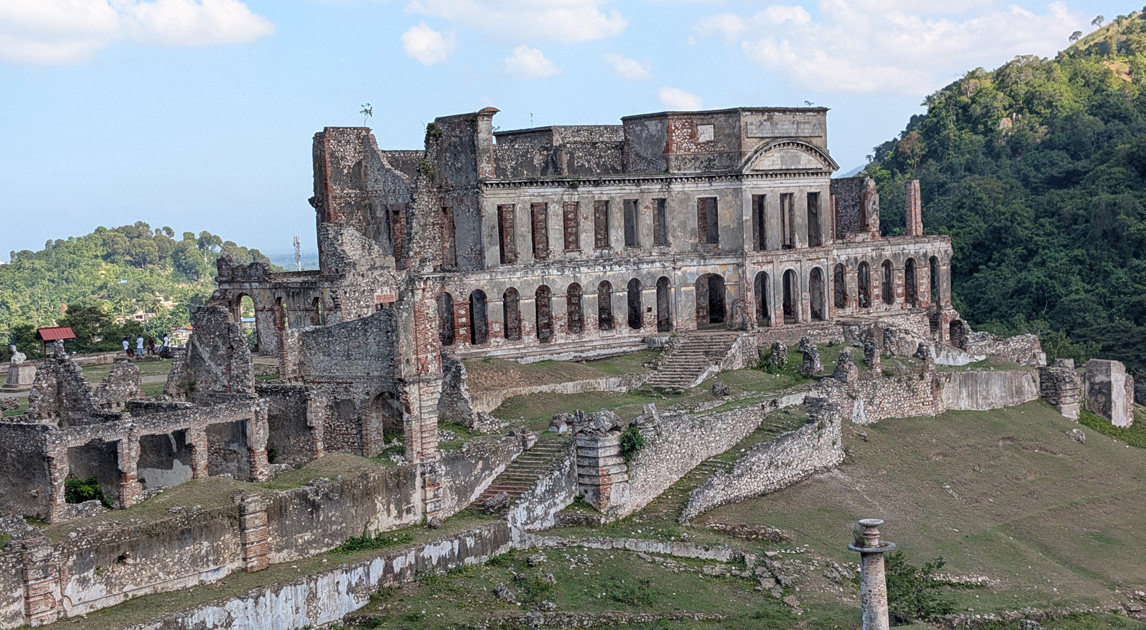
    Nearby are the grand ruins of Henri’s palace complex of San Souci. “The greatest palace in the Caribbean.” Designed to impress haughty Europeans.

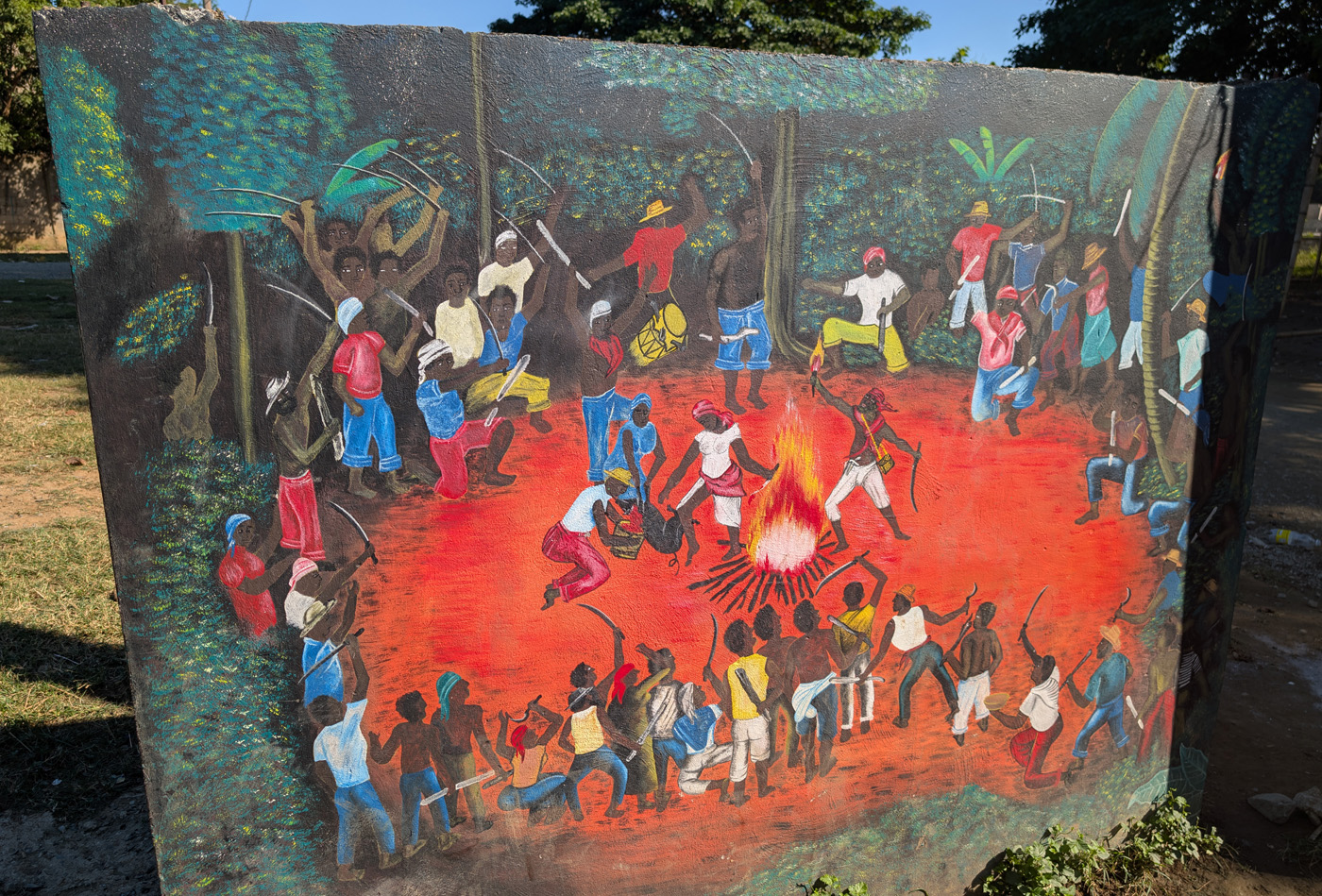
    I also visited a key revolutionary site at Bois Caiman, where supposedly the first revolutionaries bound themselves in a voodoo ceremony in 1791.  They swore to kill all the French, naturally. There’s nothing left of the original site, but the government have constructed two modern ersatz voodoo sites. Not actually for tourists, but rather to highlight to locals what is seen as a key national-origin story.  (I stumbled and grazed my hand on the way up to the sacred voodoo cave, but I mostly managed not to drip any blood inside. I’m sure nothing bad will happen.)


Copyright ©

TheWanderingScot.com